Vintage 4×4 restoration articles provide in-depth, experience-driven guidance for enthusiasts restoring classic four-wheel-drive vehicles the right way. This collection of vintage 4×4 restoration articles covers everything from body and frame repair to drivetrains, suspension geometry, engine swaps, and long-term reliability, with a focus on historically correct builds and modernized restomods. Each article is written to document real restoration standards, common pitfalls, and proven solutions for classic Broncos, Land Cruisers, Scouts, Blazers, and other iconic vintage 4×4 platforms, serving as a technical reference library for owners, builders, and buyers who want clarity instead of guesswork.

The Best Bronco Restoration Company: How to Actually Choose One
Search “best Bronco restoration company” and you’ll get a stack of homepages competing for the same words: world-class, frame-off, Coyote-swapped, concours. After a while it stops meaning anything. The owners who end up with the trucks they actually wanted didn’t pick a shop based on adjectives. They picked one based on a small number of decisions made in the right order — what kind of Bronco they wanted, what standards mattered, and which shops could prove they hold those standards in the metal, not just on the website. This is how that decision actually gets made. What “Best” Means in Early

Early Bronco Wiring Harness: Complete Cost Guide & Replacement Options
Fifty years of service leaves a mark on any electrical system. When you’re considering an Early Bronco purchase or restoration, the wiring harness isn’t immediately visible—but it determines whether your build delivers the driving experience you expect. The original 1966-1977 Ford Bronco wiring was designed for a different era. A simple powertrain, basic lighting, minimal accessories. The system worked when new, but decades of exposure and the natural evolution to modern features create an opportunity to elevate the entire electrical foundation. This guide covers Early Bronco wiring harness replacement with real costs, clear options, and a straightforward path to deciding between

Frame Inspection & Body Mount Standards for 1966–77 Broncos
No premium restoration is roadworthy until the frame is gas-passivated, patched, and measurably straight—a truth that early Broncos have earned thanks to their thin box rails and decades of salt-and-mud exposure. Early Bronco frame inspection is a crucial step in identifying any potential issues before restoration begins. Failing to answer “How far do the holes go?” and “Are the mounts still square?” invites cracks to reappear as soon as the truck hits a washboard, so we treat the frame as the project’s primary deliverable even before the body is bolted on. Why early Bronco frame inspection sets the premium baseline A
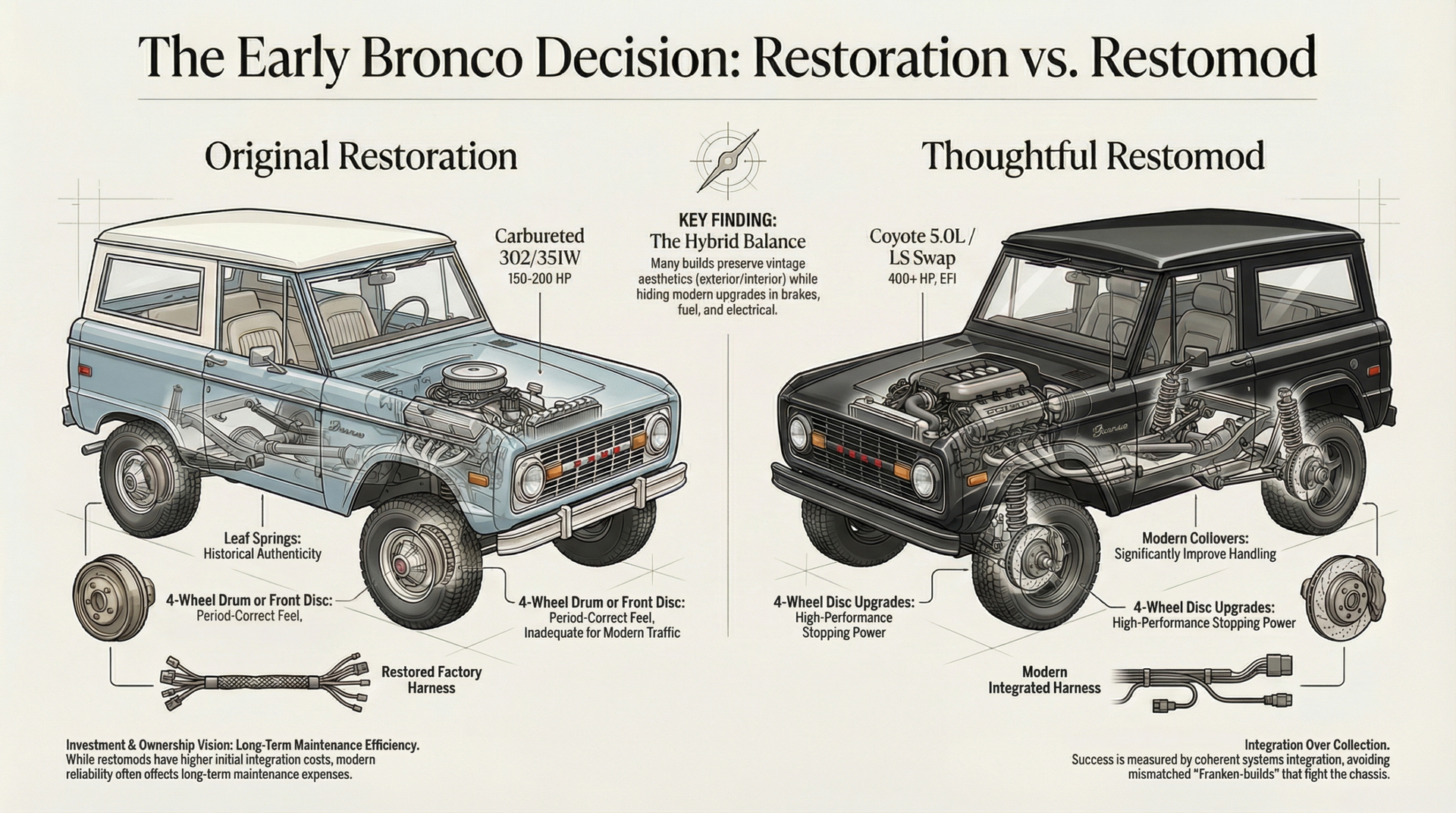
Restomod vs Restoration: Which Path Is Right for Your Early Bronco Build?
The decision between restoring an Early Bronco to original specifications or building a restomod is one of the first and most consequential choices you’ll make in any 1966-1977 Bronco project. The restomod vs restoration debate shapes your investment scope, timeline, parts sourcing strategy, the character of the finished vehicle, and ultimately whether the build meets your expectations. This isn’t a choice that can be made halfway through a project without significant expense and frustration. The suspension geometry you choose, the drivetrain you rebuild or replace, the wiring systems you install—all of these cascade from your initial decision about the character you
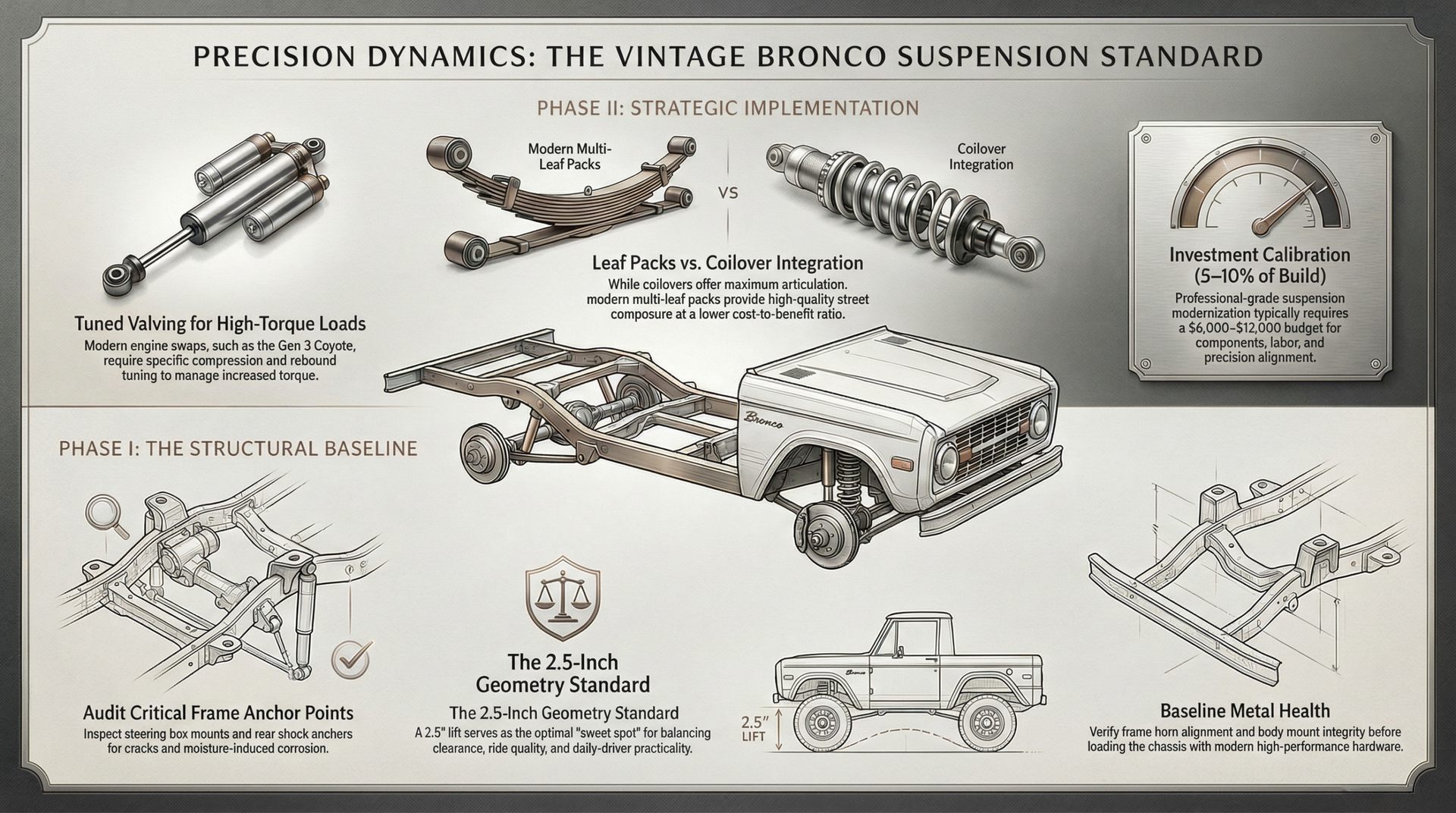
Early Bronco Suspension Standards for Daily Drivers
The first-generation Ford Bronco was built for utility, but the early Bronco suspension components from 1966–1977 were never designed for freeway miles, SoCal canyon curves, or modern braking demands. Most original coils, leaves, and shocks survive only as tired hardware that transmits corrugation, brake dive, and body roll straight through the cabin. The good news is that replacement components, valved shocks, and updated geometry can give you a confident, premium ride without turning the truck into a caricature. That’s why the right early Bronco suspension strategy matters before you drop cash on wheels, seats, or a powertrain. By focusing on fit-on

302 vs 351W vs Coyote 5.0: Choosing the Right Engine for Your Early Bronco
The engine sitting between your Early Bronco’s frame rails defines more than horsepower—it dictates how the truck drives, feels, and serves you. Three engines dominate the conversation: the classic 302 Windsor, the 351 Windsor, and the modern Coyote 5.0. Each represents a different approach to power, offering distinct advantages depending on your goals. Choosing between them isn’t about displacement or era alone. It’s about matching your engine to how you’ll actually use the truck: street driving, weekend trails, serious off-road adventures, or a high-performance restomod that bridges classic style with modern capability. Understanding the Engine Options: 302 vs 351W vs Coyote