
The first-generation Ford Bronco was built for utility in a different era. After decades of use, worn springs, shocks, bushings, or mounts can affect ride, handling, and braking stability. The good news is that replacement components, valved shocks, and updated geometry can give you a confident, premium ride without turning the truck into a caricature.
The goal is a suspension setup suited to how the Bronco will be driven, with steering, braking, tires, and ride height considered together.
ASC 4×4 works with local and remote clients on complete builds and substantial partial restorations. This guide explains the suspension decisions to discuss as part of a broader project.
Why Modernizing the Early Bronco Suspension Still Matters
The factory layout uses front coils and rear leaf springs. Age, wear, previous modifications, weight changes, and intended use all affect whether components can be retained or should be changed. A carefully chosen setup can improve control and comfort without assuming every Bronco needs the same parts.
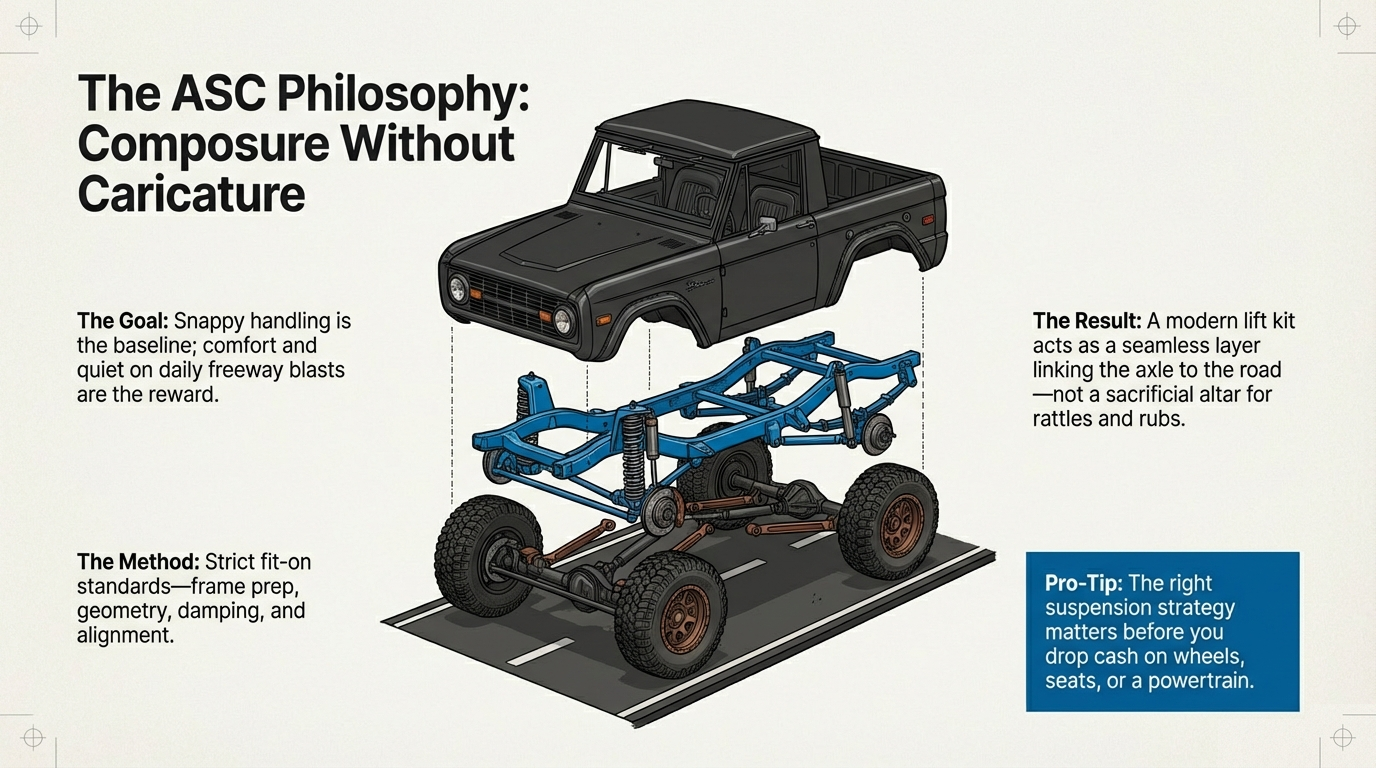
Modern suspension options can include adjustable dampers, revised springs, track bars, and sway bars. The right combination depends on the vehicle’s condition, intended use, ride height, and the rest of the build; no single component guarantees a particular ride.
Baseline Inspection: Early Bronco Suspension Health and Geometry
Before bolting anything on, inspect the Bronco like a doc checking vitals. That means:
- Steering-box mounts and surrounding frame rails, including signs of cracks, previous repairs, or corrosion.
- Frame rails, body mounts, bump-stop areas, and other locations where corrosion or past repairs can affect the build.
- Rear shock mounts and their supporting metal, including corrosion or prior repairs.
- Body mounts and pads, noting corrosion, wear, or movement.
- Door posts, hinges, and body gaps that may reveal body or mounting concerns.
- Frame horns and crossmembers, including past repairs or deformation.
A thorough inspection helps identify corrosion, worn mounts, past modifications, and alignment concerns before suspension choices are finalized. Document findings and address structural issues as part of the agreed scope.
Define Your Early Bronco Suspension Ride Target
Are you logging 60-mile commutes on Pacific Coast Highway, towing a trailer down to Baja, or showing the truck at a weekend meet? Daily-driver upgrades only work if you choose components that match your use-case:
- Commuter focus: Consider ride comfort, steering response, tire choice, and a practical stance for the roads the vehicle will use.
- Balanced street/trail: Match ride height, spring rates, damping, tire clearance, and steering geometry to the intended mix of paved and unpaved driving.
- Powertrain changes: An engine or transmission swap can change weight, packaging, and load requirements. Consider suspension, steering, braking, and drivetrain compatibility together.
Setting a goal now determines whether you match the shocks with the coil or leaf spring rate, and whether you need additional components such as drag-link drop brackets, extended brake lines, or anti-sway bar end links that survive a lifted front end. If you’re planning a complete build, share your ride goals with ASC so they can inform the overall project.
Early Bronco Suspension Component Selection and Planning
Components That Move the Needle
- Chassis reinforcement and plate repairs: fill pockets, replace badly corroded mounts, and weld in new stiffeners before installing modern hardware.
- Springs and shocks: Choose components for the intended weight, ride height, travel, and use. Front and rear configurations should work together.
- Shocks: Match the dampers and their tuning to the vehicle’s weight, springs, travel, and intended use.
- Track bar and steering geometry: Review axle location and steering geometry as part of any ride-height change.
- Sway bars: Consider whether a sway bar is appropriate for the intended handling, travel, and ride goals.
- Alignment and labor: Account for installation, alignment, and any adjustments needed to suit the complete setup.
- Drivetrain compatibility: Review driveshaft angles, mounts, axle condition, and clearance in the context of the selected powertrain and suspension.
Coilovers vs. Stock-Style Early Bronco Suspension
Coilovers and stock-style spring-and-shock arrangements offer different packaging, tuning, and cost tradeoffs. A well-matched conventional setup can work well; the best choice depends on the vehicle and the owner’s goals.
Early Bronco Suspension Lift Height and Geometry
Lift height affects steering geometry, driveline angles, brake-line clearance, and overall vehicle height. Choose it with the full build in mind, and have the completed setup inspected and aligned to appropriate specifications.
Planning the suspension budget
Ask your builder to define the scope for structural preparation, springs, shocks, steering geometry, hardware, installation, and alignment. Costs depend on the starting vehicle, components, and related work. ASC evaluates substantial partial restorations as well as complete builds; discuss the entire project rather than assuming a standalone service price.
ASC’s published range for complete custom builds is $100,000–$250,000+, with a donor vehicle required. Final pricing depends on the agreed scope and specifications. Tell ASC about your Bronco and ride goals.
Choosing a Suspension Scope With Your Builder
Describe how the truck will be driven, the powertrain and tire plans, your preferred stance, and any ride or steering concerns. Ask which components, inspection, alignment, and follow-up are included in the proposed scope. ASC considers substantial partial restorations and complete builds according to project fit.
Alignment, Tuning, and Maintenance After Early Bronco Suspension Installation
After installation, the builder should check alignment, ride height, clearances, steering, and related hardware against the specifications appropriate to the vehicle and components. Corner balancing may be useful for some configurations, but is not a universal requirement. When suspension is part of a substantial restoration or restomod, discuss the intended ride and build scope with ASC.
Follow the builder’s and component manufacturers’ recommendations for post-build checks and maintenance. Keep alignment information and service records with the vehicle.
Common Early Bronco Suspension Mistakes
- Overlooking corrosion or previous damage around suspension and body mounts.
- Choosing shocks without checking compatibility with the springs, travel, weight, and intended use.
- Choosing lift height based on looks instead of functional clearance, leading to rubbing or binding at full droop.
- Choosing wheel and tire fitment without checking clearance and the effects on steering geometry.
- Overlooking how a powertrain change affects drivetrain, steering, braking, and suspension requirements.
What to Include in a Suspension Build Scope
- Documented pre-work inspection of body mounts, hinges, and frame horns before touching the suspension.
- Clear component specifications and installation requirements appropriate to the selected parts.
- An alignment and road-test plan suited to the vehicle and agreed scope.
- Documented ride-height and alignment information as appropriate to the completed build.
- Ask what project documentation, road-test information, and remote updates will be provided as part of the agreed scope.
FAQs
Can I keep stock leaf springs and change the shocks? It depends on the springs’ condition, vehicle weight, ride height, and the intended setup. A builder should assess the springs and related mounts before recommending components.
What affects a suspension budget? Condition, components, ride-height changes, fabrication, related steering and braking work, and labor all affect the scope. Ask for a project-specific proposal rather than relying on a generic parts list.
When should alignment be checked? Have the completed vehicle aligned as appropriate after suspension work, and follow the builder’s and component manufacturers’ recommendations for any subsequent checks.
Does a Coyote swap require suspension changes? Not automatically. The builder should evaluate the vehicle’s weight, ride height, existing components, clearances, intended use, and the full powertrain installation before recommending changes.
Can I retain an original-looking appearance? Many owners choose components that suit the vehicle’s classic appearance while addressing the ride and handling they want. Discuss the tradeoffs and document the selected parts.
Conclusion
Ready for a daily-driver early Bronco that honors the classic while delivering modern composure? Let’s talk: asc4x4.com | (310) 396-6341