
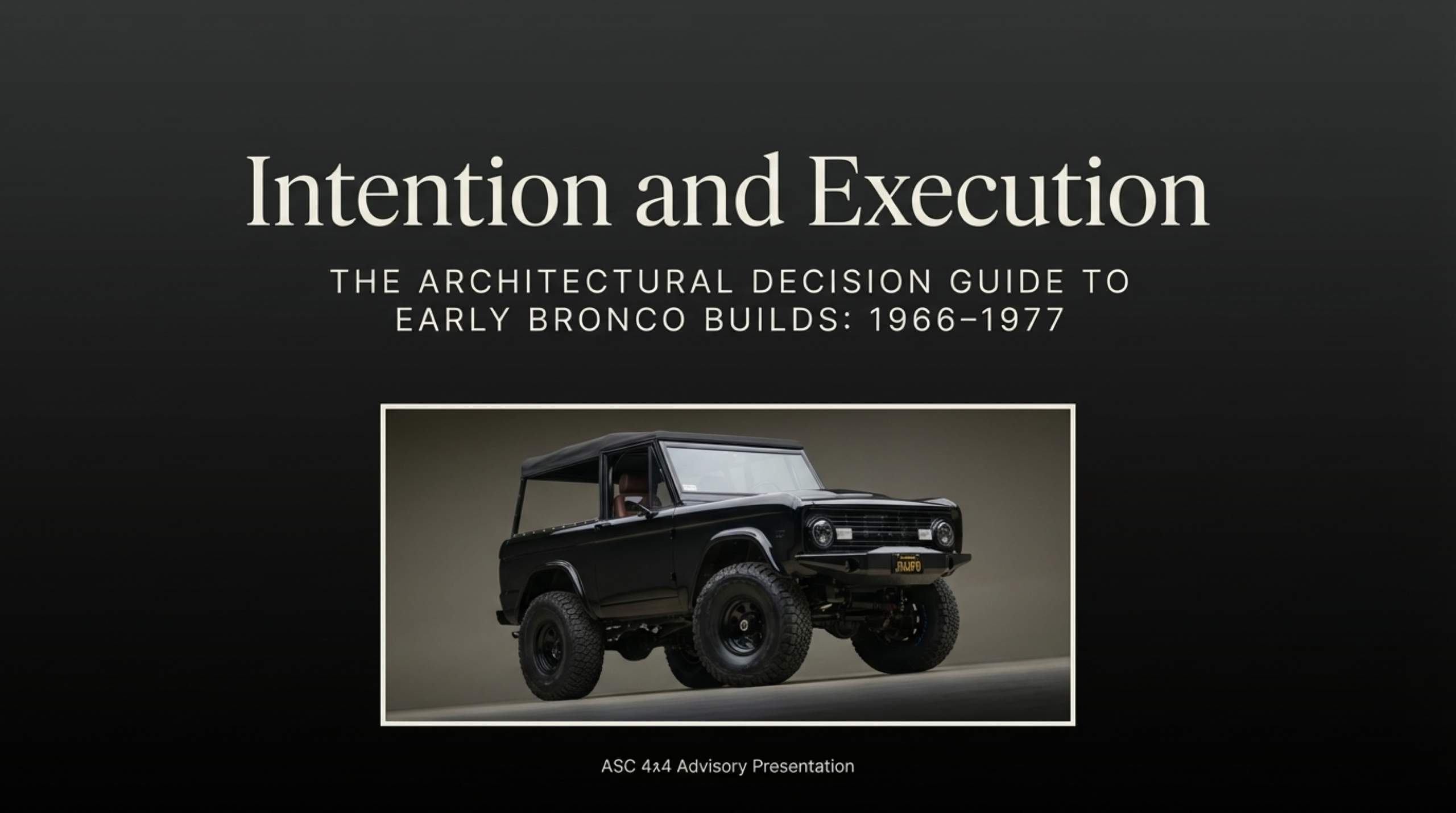
The decision between restoring an Early Bronco to original specifications or building a restomod is one of the first and most consequential choices you’ll make in any 1966-1977 Bronco project. The restomod vs restoration debate shapes your investment scope, timeline, parts sourcing strategy, the character of the finished vehicle, and ultimately whether the build meets your expectations.
This isn’t a choice that can be made halfway through a project without significant expense and frustration. The suspension geometry you choose, the drivetrain you rebuild or replace, the wiring systems you install—all of these cascade from your initial decision about the character you want your Bronco to embody.
Neither approach is inherently superior. A concours-quality restoration represents craftsmanship and historical preservation. A thoughtfully executed restomod represents innovation and adaptation. Both, when done to high standards, produce vehicles that command respect in the Early Bronco community. The question isn’t which is better—it’s which is right for your goals, your investment scope, and how you intend to use the vehicle.
Understanding the Core Difference
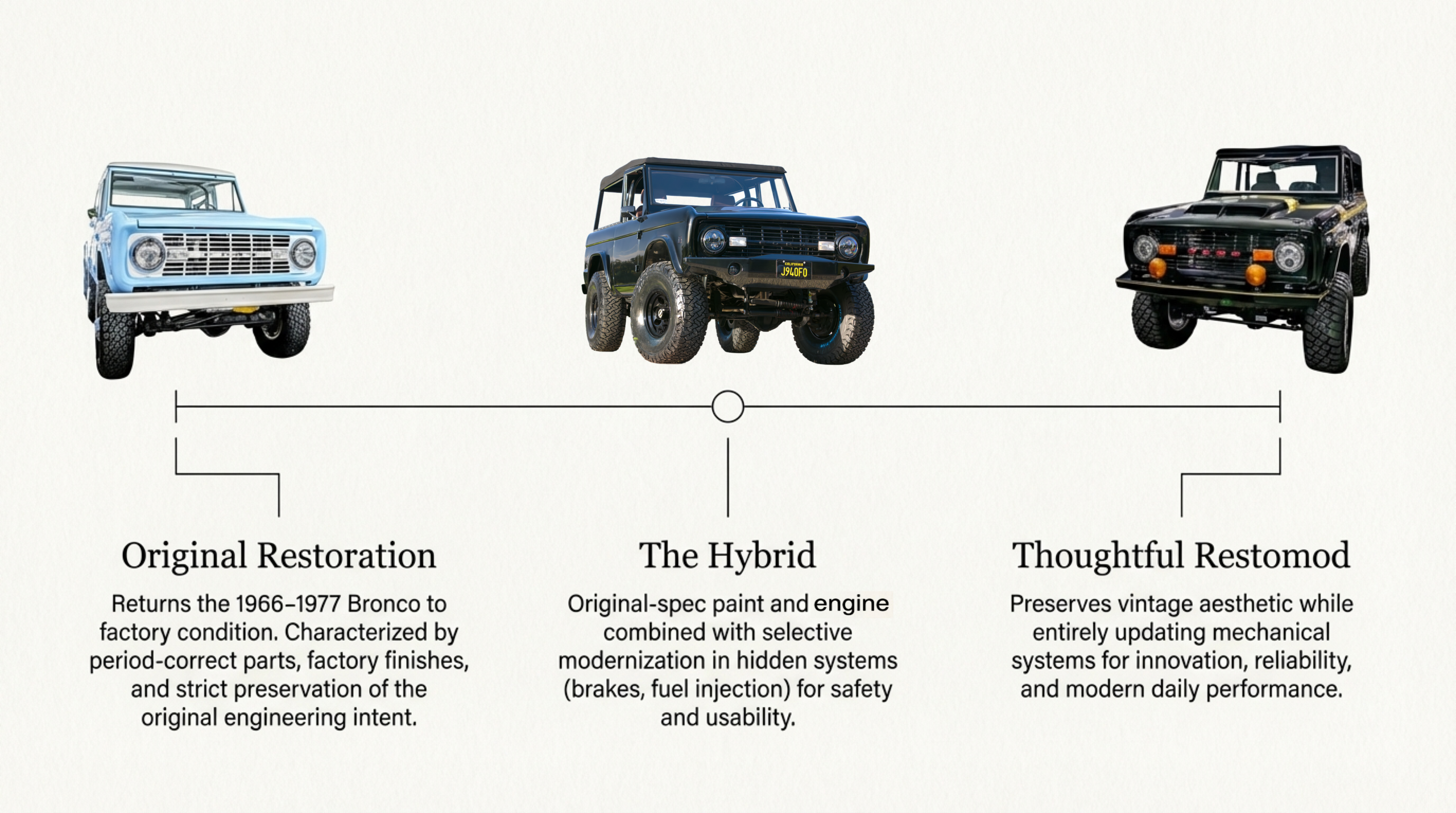
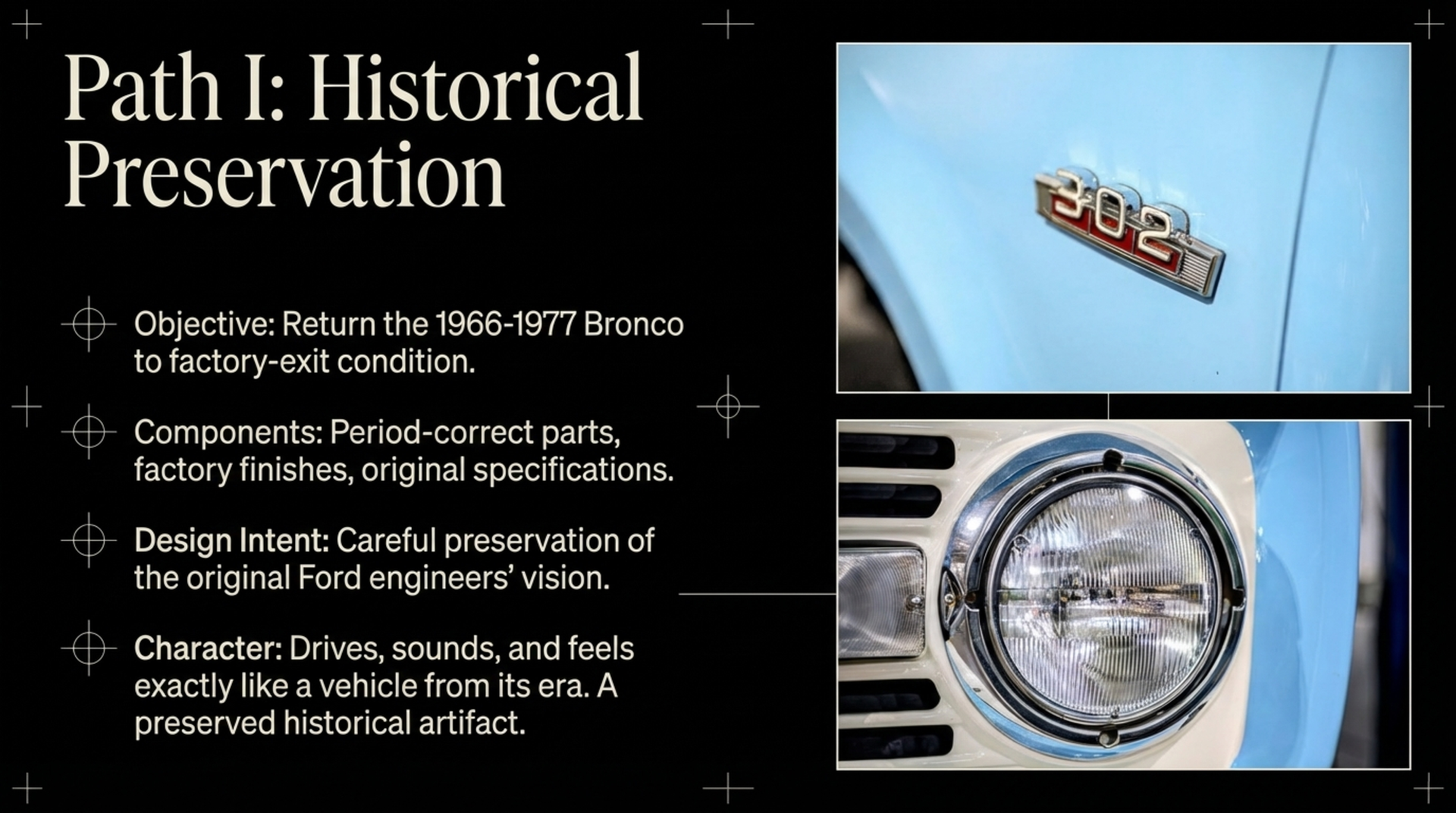
Original restoration aims to return a 1966-1977 Ford Bronco to the condition it left the factory—or as close to that condition as practicality allows. This means period-correct parts, factory finishes, original specifications for engines and drivetrains, and careful preservation of the design intent of the original engineers. A restored Bronco drives, sounds, and feels like a vehicle from its era, for better or worse.
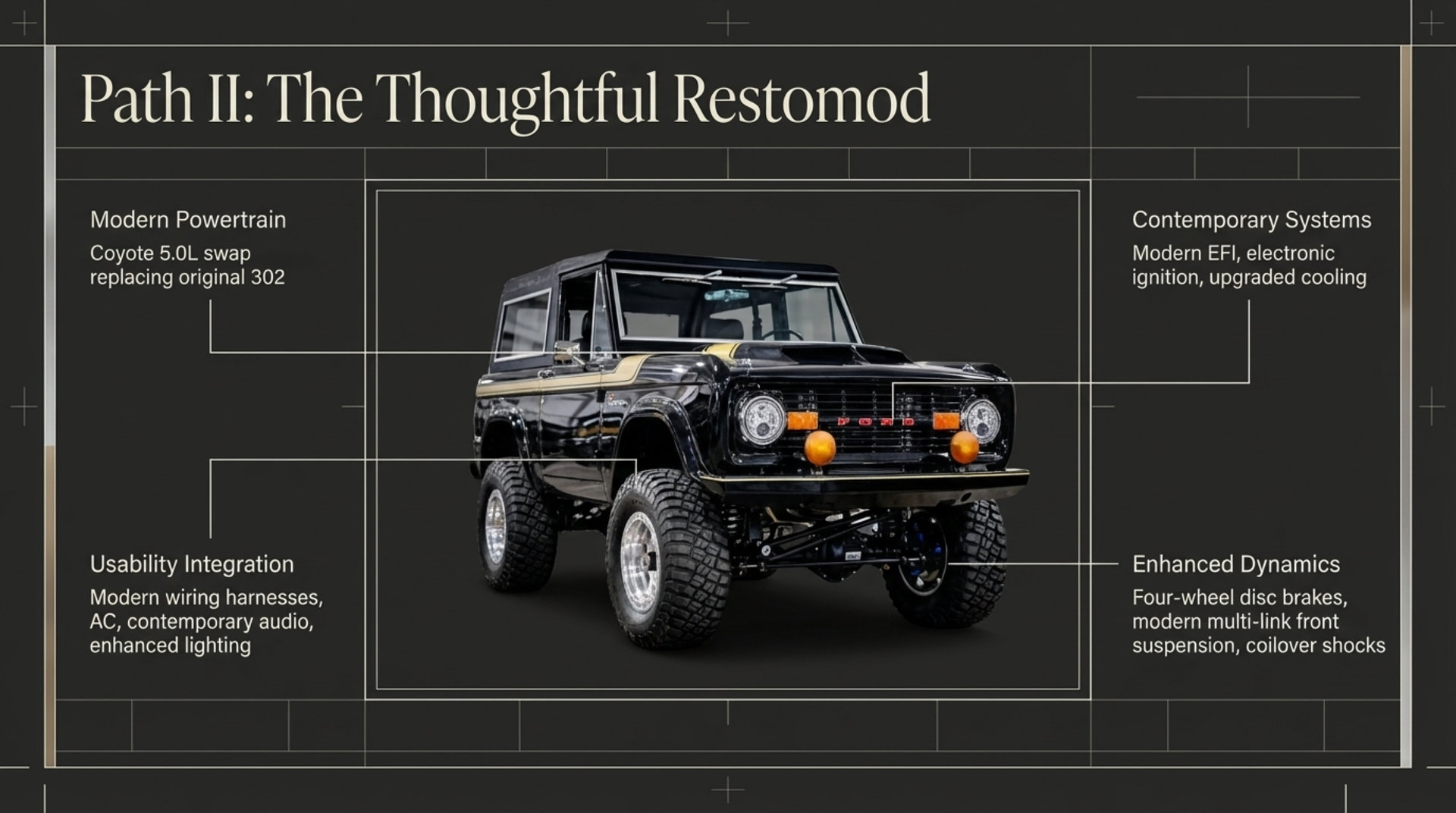
Restomod—short for restored and modified—takes a different approach. The exterior aesthetic typically preserves the vintage character that makes Early Broncos desirable, but the mechanical systems receive modern upgrades. This might mean a Coyote 5.0L engine replacing the original 302, modern fuel injection instead of a carburetor, disc brakes all around, updated suspension components, improved wiring harnesses, and contemporary amenities like air conditioning, modern audio systems, and enhanced lighting.
There’s a spectrum between these extremes. Some builds are predominantly original with careful modernization in specific areas—upgraded brakes and suspension, for example, while retaining the original engine. Others are modern performance vehicles wearing vintage bodywork. The key is understanding where your build falls on this spectrum and making intentional choices rather than drifting into an unplanned hybrid.
Investment Considerations: Where Resources Are Allocated
The investment reality of Early Bronco builds often surprises newcomers. Neither restoration nor restomod is inexpensive, but where resources go differs significantly.
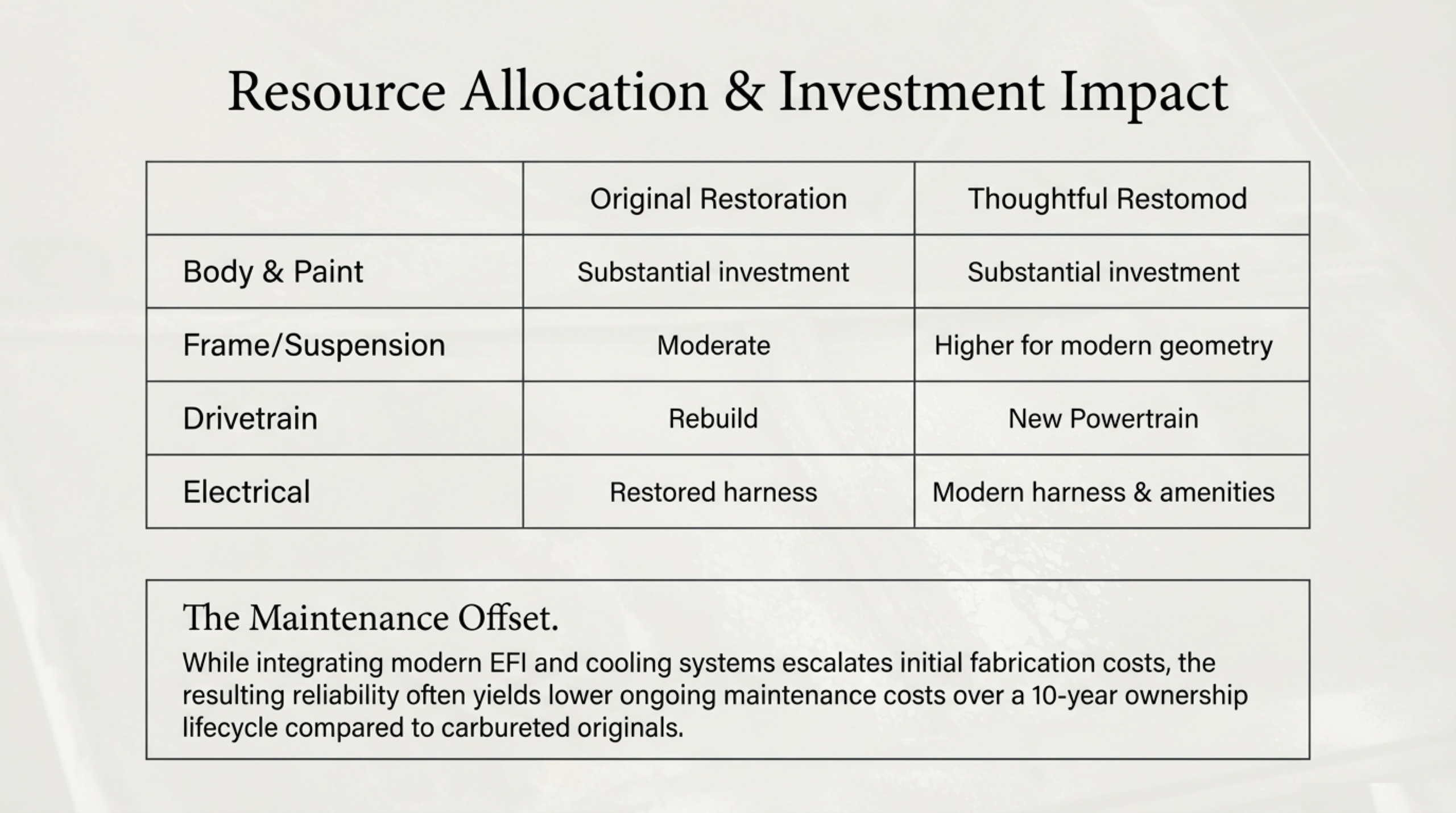
Investment Overview: Restoration vs Restomod
| Cost Category | Original Restoration | Thoughtful Restomod |
|---|---|---|
| Body & Paint | Substantial investment | Substantial investment |
| Frame & Suspension | Moderate to high investment | Higher investment for modern components |
| Drivetrain | Rebuild investment | Modern powertrain investment |
| Fuel System | Carburetor system investment | EFI system investment |
| Brakes | Drum or front disc investment | Four-wheel disc investment |
| Electrical | Restored harness investment | Modern harness investment |
| Interior | Standard to premium investment | Enhanced comfort investment |
Quality work executed by competent professionals represents significant investment. DIY builds can reduce labor costs significantly but often require specialized tools and expertise. Premium builds of either type can exceed these figures when using premium components or pursuing concours-level standards.
Initial investment tells only part of the story. A restomod with modern fuel injection, upgraded cooling, and reliable modern powertrain typically requires less ongoing maintenance than a restored original with carburetors and period-correct engines. Over ten years of ownership, maintenance savings on a well-executed restomod can offset some of the higher initial investment.
Hidden factors exist in both approaches. Restoration can surprise you with the challenge of sourcing rare original parts or the work required to bring worn components back to specification. Restomod investment escalates through the complexity of integrating modern systems into vintage chassis—the fabrication, custom tuning, and problem-solving that come from mixing old and new.
Performance and Drivability Trade-offs
The driving experience differs substantially between restored originals and restomods, and these differences flow directly from your approach to mechanical systems.
Engine and Powertrain
The original 302 and 351W engines in Early Broncos were designed for different priorities than modern engines. They produce modest power by contemporary standards—typically 150-200 horsepower in factory form—but deliver good low-end torque suitable for off-road use. Rebuilt engines can improve on this, but they’re still constrained by the fundamental architecture of the design.
Restomod powertrains offer dramatic improvements. A Coyote 5.0L swap delivers 400+ horsepower with modern reliability and fuel efficiency. LS conversions offer proven durability and broad parts availability. Even retaining a small-block Windsor with fuel injection, electronic ignition, and a modern overdrive transmission transforms drivability. The difference in acceleration, highway cruising capability, and overall refinement is substantial.
Suspension and Handling
Early Broncos were designed with leaf-spring suspension all around—a simple, durable system that works well for its intended purpose but offers limited performance compared to modern designs. Original-spec restorations maintain this configuration, which provides a period-correct ride quality that some enthusiasts genuinely enjoy.
Restomod approaches to suspension vary widely. Some builds retain the leaf-spring layout with improved springs and high-quality shock absorbers. Others incorporate modern multi-link front suspensions, coilover shocks, and carefully designed geometry that significantly improves ride quality and handling. The goal isn’t necessarily maximum off-road capability—it’s about creating a vehicle that’s enjoyable to drive on modern roads while maintaining its vintage character.
Braking and Safety
Original Early Broncos were equipped with drum brakes all around in early years, with front discs becoming available later. Restored originals maintain this specification, which can feel inadequate in modern traffic conditions, particularly with larger tires.
Most restomods include upgraded braking systems—four-wheel disc brakes, modern master cylinders, improved proportioning valves. The difference in stopping power and brake fade resistance is significant and represents one of the most meaningful safety improvements possible. Even many preservation-oriented restorations upgrade to at least front disc brakes for safety reasons.
Authenticity vs. Usability: Finding Your Balance
The tension between historical authenticity and modern usability sits at the heart of the restoration vs. restomod decision. This isn’t a binary choice—smart builds find balance points that acknowledge both priorities.
For collectors and preservation-focused enthusiasts, authenticity is paramount. Every badge, fastener, and finish should match what left the factory. These vehicles are often destined for shows, collections, and occasional careful use rather than daily driving. A restoration focused on authenticity tells the story of the original vehicle and preserves it as a historical artifact.
For enthusiasts who want to drive their Broncos regularly, usability takes precedence. The character and aesthetic are preserved, but the systems are upgraded to deliver reliable, comfortable, safe performance that matches modern expectations. These vehicles are meant to be used—to commute, to travel, to explore—without the compromises that sometimes accompany original-spec vehicles.
The middle ground is where many builds live. A Bronco with original-spec paint and interior might feature upgraded brakes, suspension, and fuel injection. Or a Coyote-swapped Bronco might retain original-style interior trim and careful detailing that preserves the vintage aesthetic. The key is making intentional choices that reflect your priorities rather than defaulting to extremes.
Decision Guide: Which Approach Fits You?
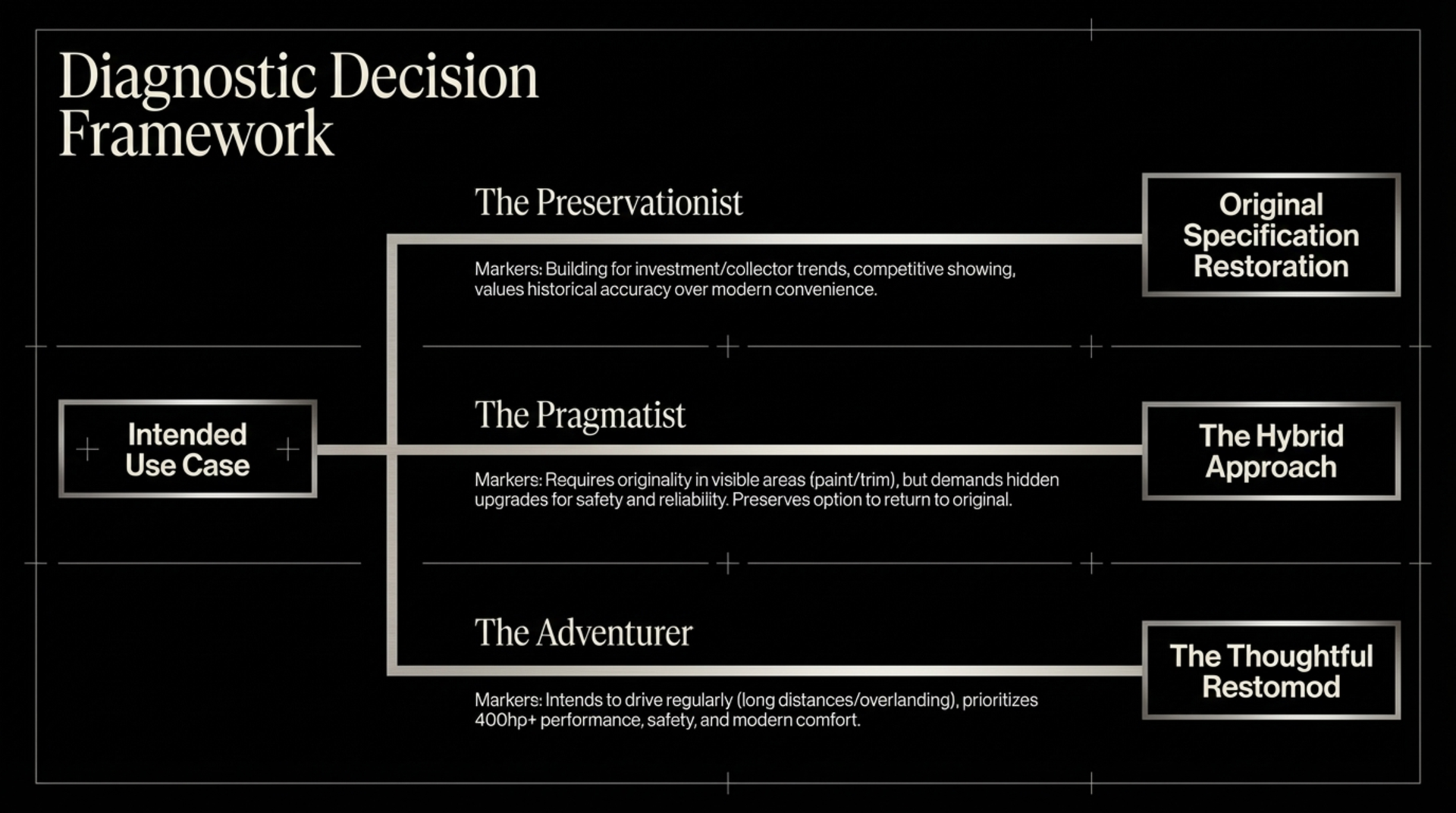
Choose Original Restoration if:
- You’re a collector focused on historical preservation
- You plan to show the vehicle competitively
- You value originality over modern convenience
- Your will limit usage to occasional driving in controlled conditions
- You’re building for investment with an eye toward collector market trends
Choose Thoughtful Restomod if:
- You want to drive your Bronco regularly, including longer distances
- You prioritize performance, reliability, and safety
- You intend to use the vehicle for overlanding, road trips, or adventure
- You value character over strict historical accuracy
- You want the vintage aesthetic with modern drivability
Consider the Hybrid Approach if:
- You want to maintain originality in visible areas (exterior, interior trim)
- You’re comfortable upgrading hidden systems (brakes, fuel, electrical)
- Your investment scope requires prioritizing upgrades that deliver the most benefit
- You want to preserve the option of returning to original specification later
ASC Standards: Quality Means Integration, Not Just Parts
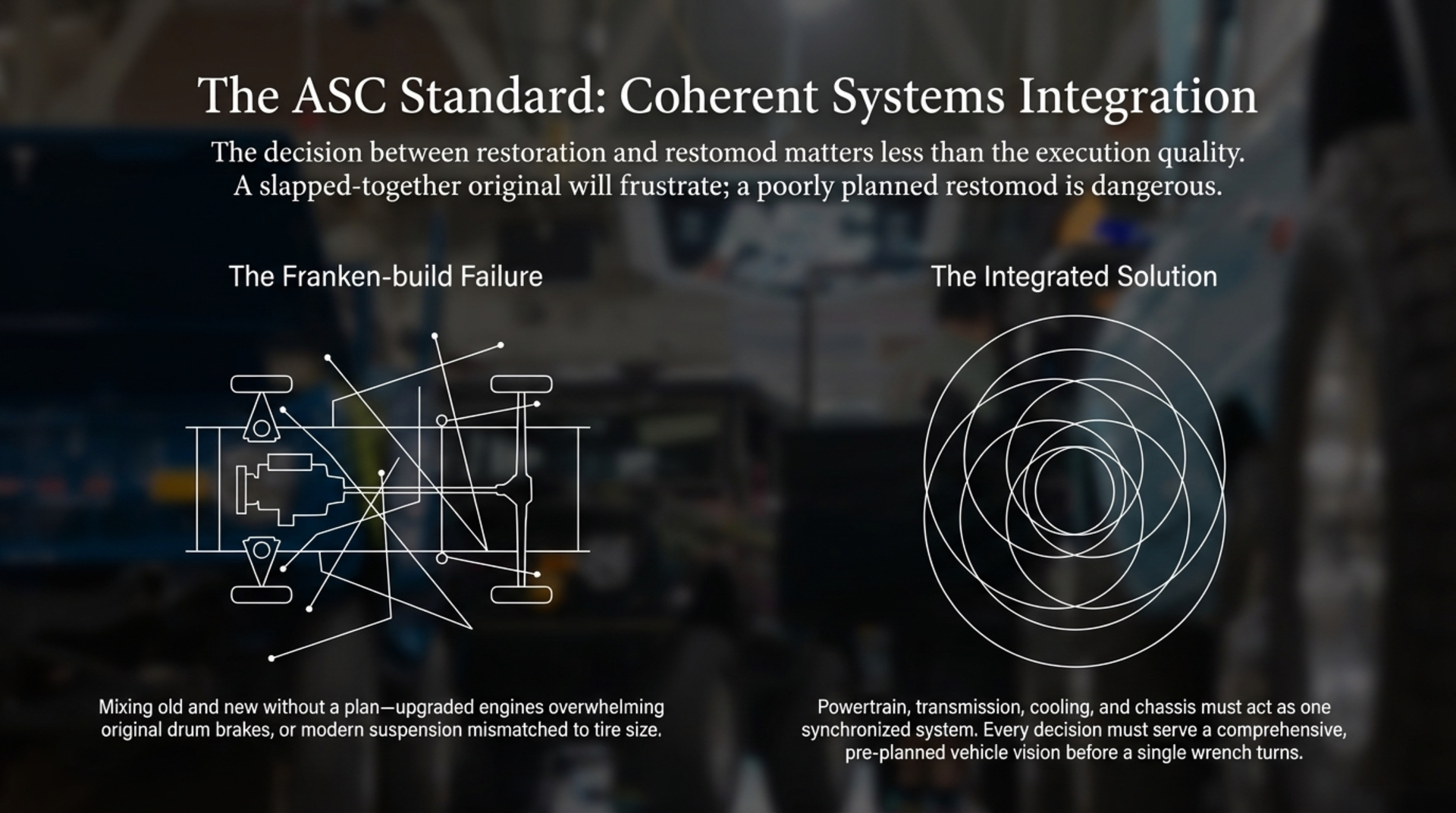
At ASC 4×4, we’ve built and restored dozens of Early Broncos, and we’ve seen enough projects to understand that the decision between restoration and restomod matters less than the execution quality. A poorly executed restoration will frustrate you more than a well-executed restomod. A thoughtfully planned restomod will outperform a slapped-together original-spec build every time.
Our standards focus on systems integration. Whether we’re rebuilding an original 302 or installing a Coyote, we think about how that powertrain works with the transmission, transfer case, cooling system, and chassis. Whether we’re restoring original leaf springs or designing a modern suspension system, we consider how it affects ride quality, handling, and intended use. The components must work together as a coherent system, not as a collection of individual parts.
We avoid the “Franken-build” problem where mismatched components fight against each other—the upgraded engine that overwhelms the original brakes, the modern suspension that doesn’t work with the intended tire size, the electrical system that’s a patchwork of old and new technology. Every decision serves the overall vision for the vehicle.
Planning a Build With Us
For clients in Southern California and those coordinating remote builds, we help clarify that vision early in the process. We discuss intended use, investment parameters, and priorities before any wrench turns. The restoration vs. restomod decision emerges from those conversations as part of a comprehensive plan, not as an abstract choice made in isolation.
The vehicle that leaves our shop, whether restored to original specification or thoughtfully restomodded, is a complete, coherent system built to standards that honor the Bronco’s heritage while delivering the performance and reliability our clients expect. That’s what quality means—execution that matches intention.
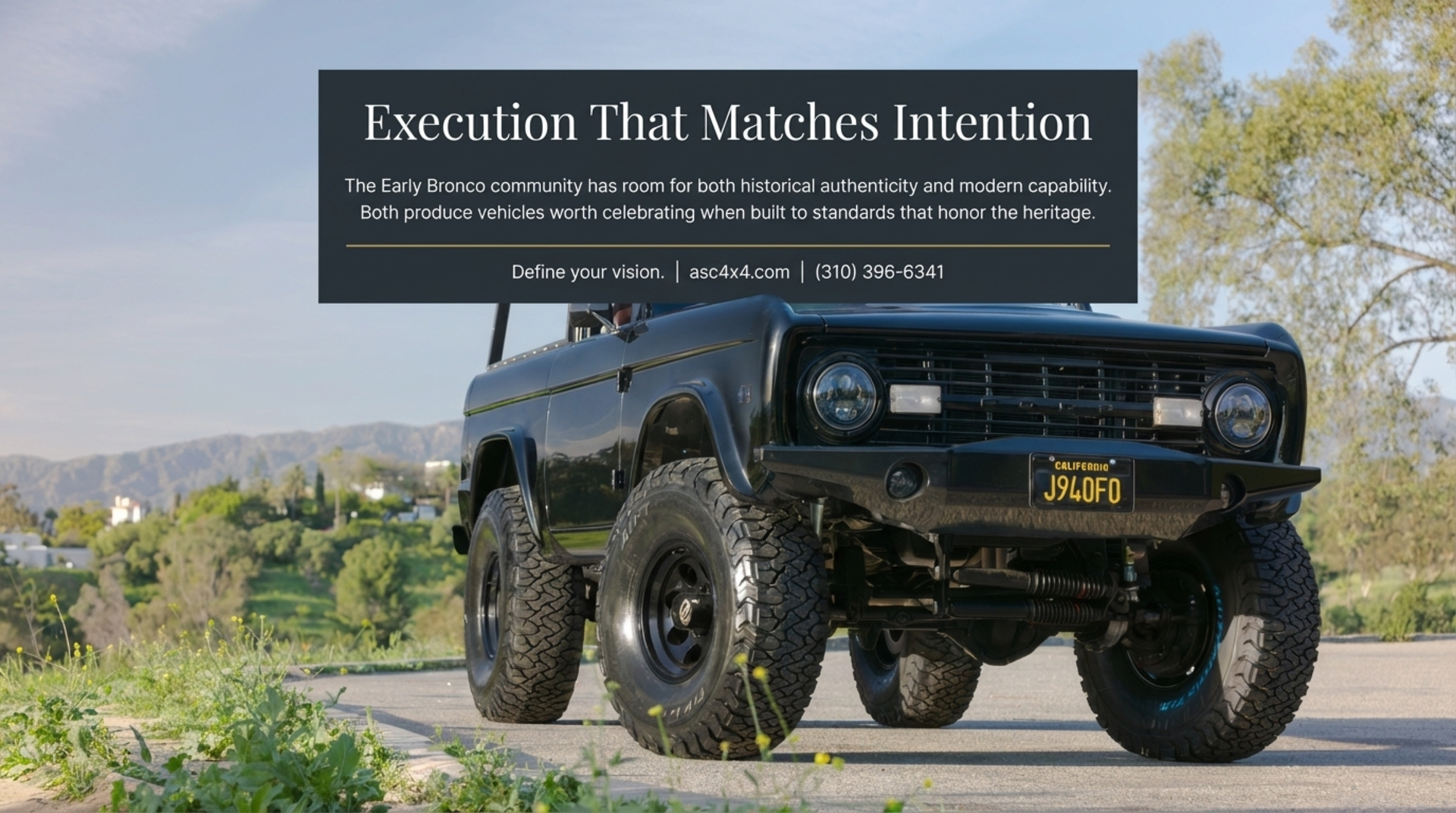
Your Early Bronco project deserves the same thoughtful approach. Whether you’re drawn to historical authenticity or modern capability, the key is making intentional choices and executing them to high standards. The Bronco community has room for both approaches, and both produce vehicles worth celebrating when done right.
Ready to discuss your Early Bronco vision? Whether you’re considering a period-correct restoration or a thoughtful restomod approach, we can help you evaluate your options and plan a build that matches your goals.
asc4x4.com | (310) 396-6341
Sources
Kincer Chassis – Restoring Broncos – 10-Step Early Bronco Restoration Guide
Tom’s Offroad – Basic Tips For Planning Your Classic Ford Bronco Restoration
Classic Broncos – Planning A full-blown Restoration/Restomod | Where should I start?
Additional Reading
Early Bronco Rust Repair: Realities and Standards for Floors, Rockers, and Door Posts (1966–1977)
302 vs 351W vs Coyote 5.0: Choosing the Right Engine for Your Early Bronco