
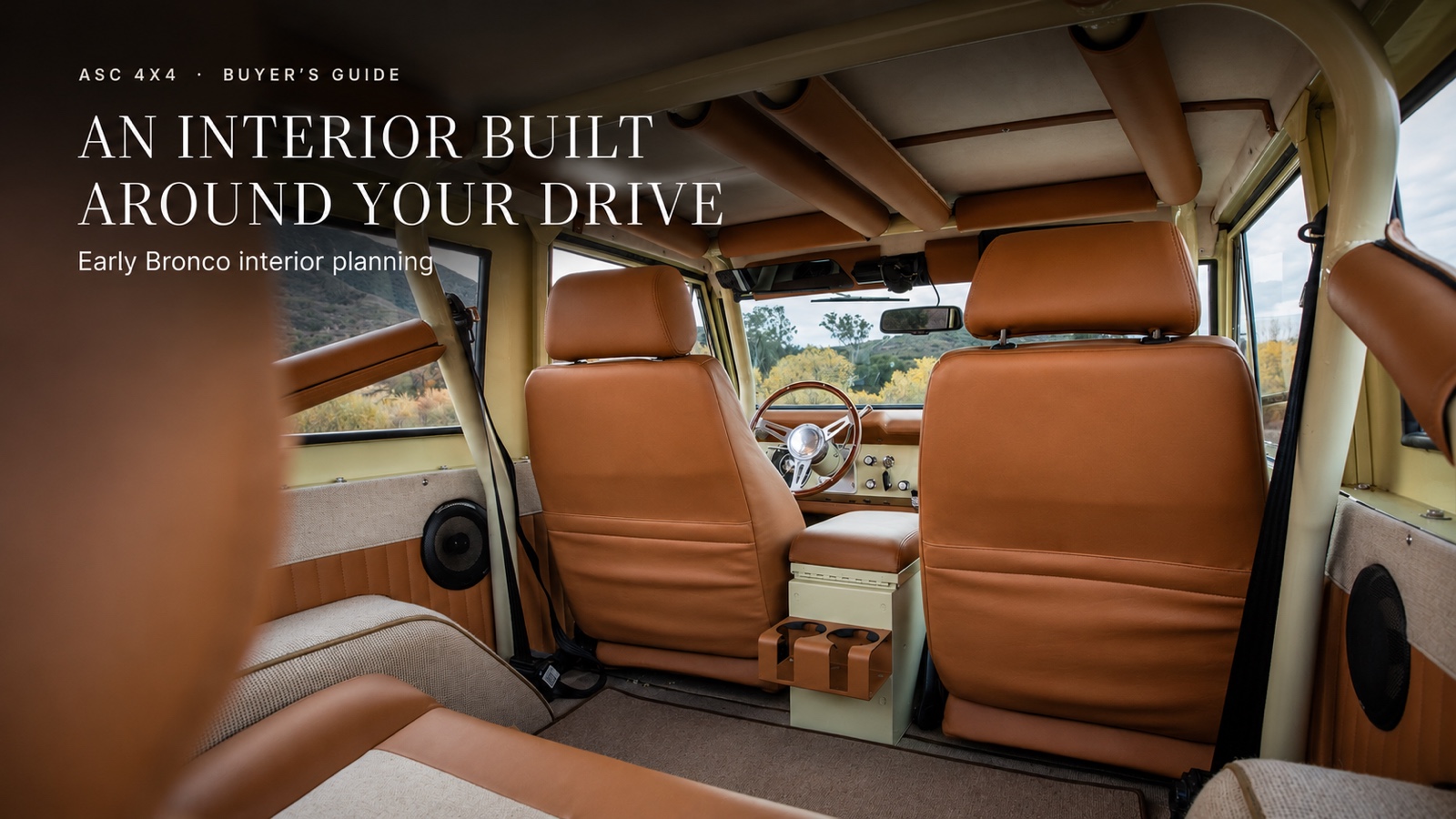
The best early Bronco interior is the one that works on an ordinary Tuesday as well as it looks in a photograph. Before choosing upholstery or a steering wheel, think about the people who will climb in, the roads you will take, and what you want within reach once the engine is running.
A 1966–1977 Bronco has character in abundance. It also has a compact cabin and a very different starting point from a modern SUV. A thoughtful interior plan respects that original personality while making room for the way you actually intend to use the truck.
Start with the trip, not the trim
Picture three real outings: a quick coffee run, the longest drive you expect to take, and a day carrying passengers or gear. Who is driving? Does anyone need easy access to the rear seat? Will the top be on, off, or changed with the season? Where will the bags, water bottles, and phones go?
Write down what matters in order: driver comfort, rear-seat access, a quieter cabin, easy-to-clean materials, a particular period look, or something else. These priorities give your builder a useful starting point when two good ideas compete for the same space.
Get seating and driving position right first
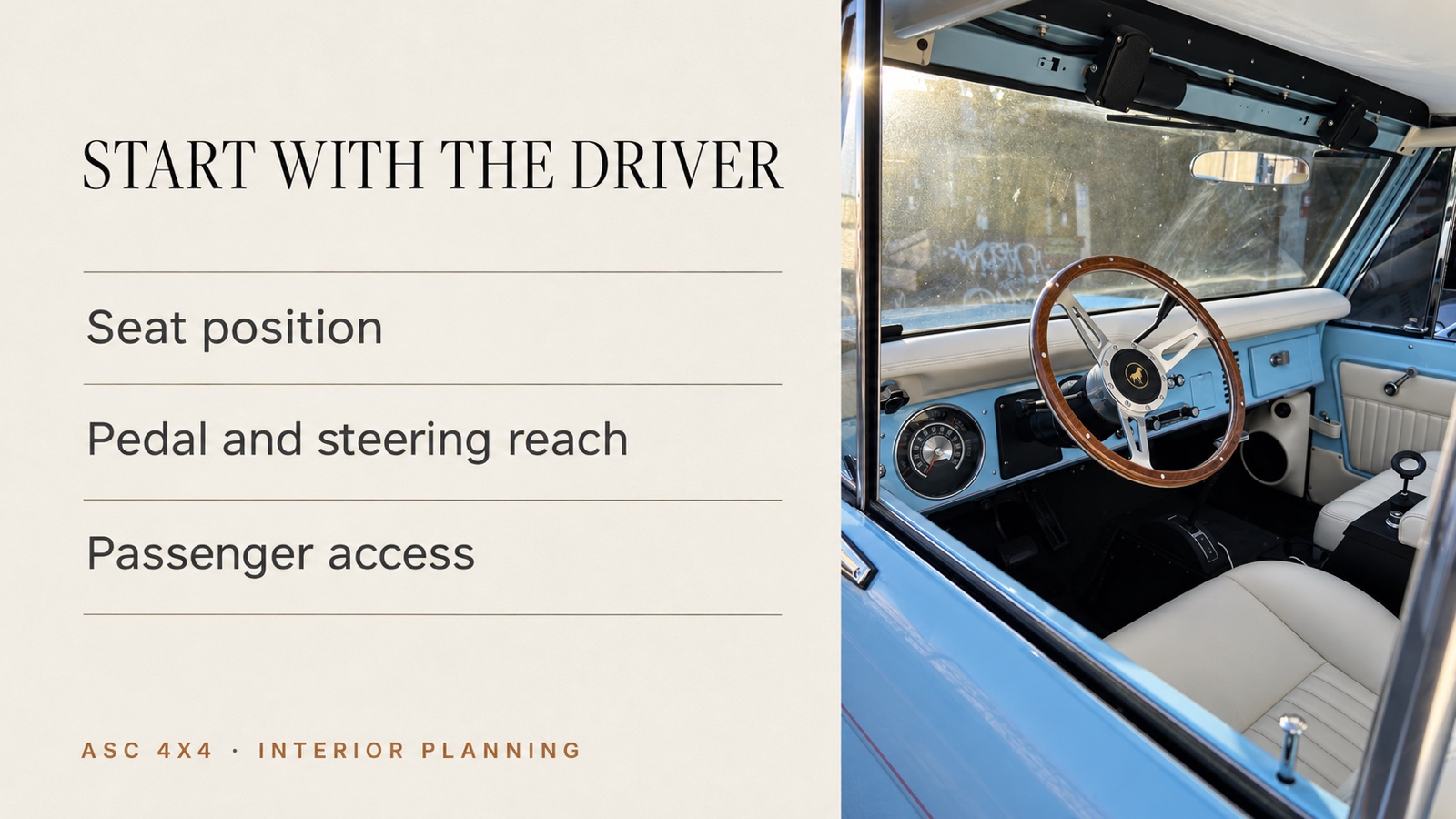
A beautiful seat is not much help if the driver cannot settle comfortably behind the wheel. Talk through seat height, travel, backrest angle, headroom, and the distance to the pedals and steering wheel. If more than one person will drive, include them in the conversation. Discuss getting in and out, too, especially if the truck will sit higher than stock.
Rear seating brings its own choices. Consider how often adults or children will ride there, how they will enter, and what cargo space you need when the seat is occupied. Ask the shop to explain how proposed seats and mounting arrangements affect those everyday details before upholstery is ordered.
Plan restraints as part of the cabin
Seat belts, seats, mounting points, and any child-restraint needs belong in the initial design conversation. Ask a qualified builder to assess the vehicle and explain appropriate restraint options and installation for your intended passengers. Applicable requirements vary by location and vehicle; verify them for your situation. For families, NHTSA’s car seat guidance is a useful starting point. A color match can wait until the fundamentals are resolved.
Choose early Bronco interior materials
Leather, vinyl, cloth, and combinations of materials can each create a distinct feel. The right choice depends on exposure to sun and moisture, how often the top will be removed, cleaning preferences, and the look you want to maintain over time. Request actual samples, handle them, and view them in daylight as well as indoors.
Think beyond the seats. Floor covering, door panels, the center console, and trim all see different kinds of wear. A cabin used for beach weekends may call for different priorities than one driven mainly to dinner. Ask how each proposed material should be cared for, and decide where you are comfortable trading easy cleanup for a particular texture or finish.
Make comfort a system
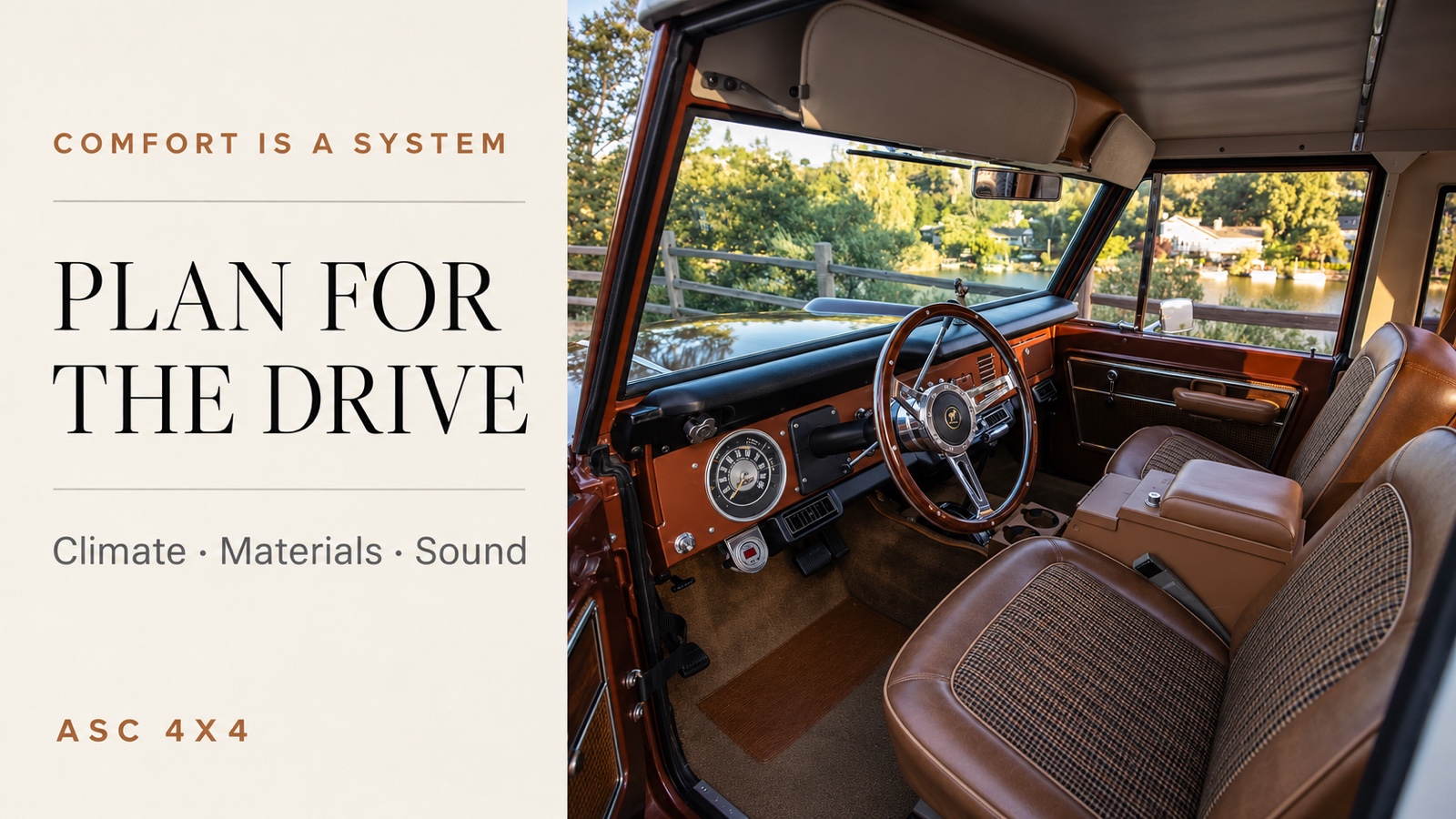
Heat, ventilation, air conditioning, insulation, and weather sealing all influence how a Bronco feels on the road. Start with your climate and typical trips. A truck used in summer traffic presents different needs from one driven on cool mornings with the windows open.
Discuss your comfort goals with the builder early, because components, controls, and vents need space. Sound management deserves the same treatment: a quieter cabin can make conversation and longer drives more pleasant, but no vintage open-air vehicle will feel exactly like a modern sealed SUV. Set expectations around how you want to use it.
Give everyday objects a place
Storage is easy to underestimate in an early Bronco interior. Think about a phone, sunglasses, keys, water bottles, a jacket, and anything you regularly carry. Decide what needs to be reachable while parked, what should be secured, and what can ride in the rear cargo area.
A console, door storage, or a simple dedicated phone location can make a difference, but each occupies space. Check that the design leaves room for passengers and does not interfere with seat movement or controls. If you expect to carry larger items, bring their dimensions into the planning discussion.
Keep the controls intuitive
Instrumentation, lighting, audio, charging, and switches should support the drive rather than turn the dashboard into a scavenger hunt. Decide which information you want at a glance, which controls you use often, and whether you prefer a more original appearance or a more contemporary layout.
Ask where proposed switches and vents will sit, and look at the arrangement from the driver’s seat if possible. If you want a phone connection or audio system, discuss where the equipment and controls will live. Good integration is as much about usability as hiding hardware.
Bring the pieces together before ordering
Collect reference photos, but label what you like in each one. One image may have the right seat shape, another the right color palette, and a third a dashboard layout you find comfortable. Ask your builder to capture the agreed direction in the build scope, including materials, finishes, seating, comfort features, storage, and any decisions still open.
Before approving the final selections, ask how changes affect fit, timing, and budget. If you are planning from a distance, our guide to commissioning an early Bronco restoration remotely covers ways to document decisions and stay involved.
Build an interior that feels like yours
There is no single correct early Bronco interior. Some owners want restrained, close-to-original details; others want more comfort and technology for regular use. The strongest interiors start with the people who will use them and make the design choices work together.
Explore ASC’s completed builds and custom interior services, then tell us about your Bronco and how you want to drive it. We can talk through the priorities and the possibilities for your project.