
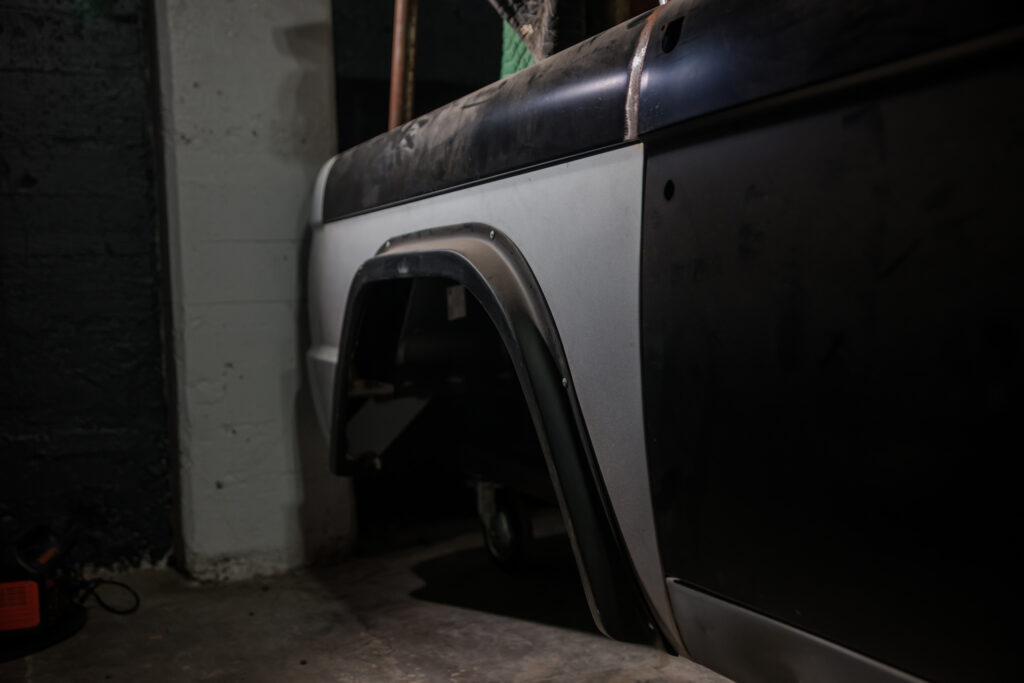
 Premium class starts with the tub
This is where early bronco body tub standards either become a defining advantage—or a quiet liability you discover later. Selling a floor repair as a “restoration” is a choice, not a necessity. The Early Bronco’s magic lives in its small, rugged tub, and buyers chasing that experience tune for feel and confidence, not shortcuts.
When the floor, rocker, and rear quarter channels turn into swiss cheese, confidence disappears. At that point, the only durable solution is to remove the tub, reverse engineer it, and install a reproduction built to tighter-than-original tolerances. That approach goes beyond replacing rusted steel. It restores body geometry, door openings, and mounting surfaces so every future modification shares a stable baseline.
ASC’s standard starts at the bare frame. The team installs a tub that already solves fitment, corrosion resistance, and mount placement. Anything less becomes a patch that the next inspection will expose.
If you’re evaluating a build, this remains the simplest truth: early bronco body tub standards determine everything buyers feel—door confidence, NVH discipline, and the “one-piece” character that separates a premium truck from a shiny one.
What makes a reproduction tub “valid”
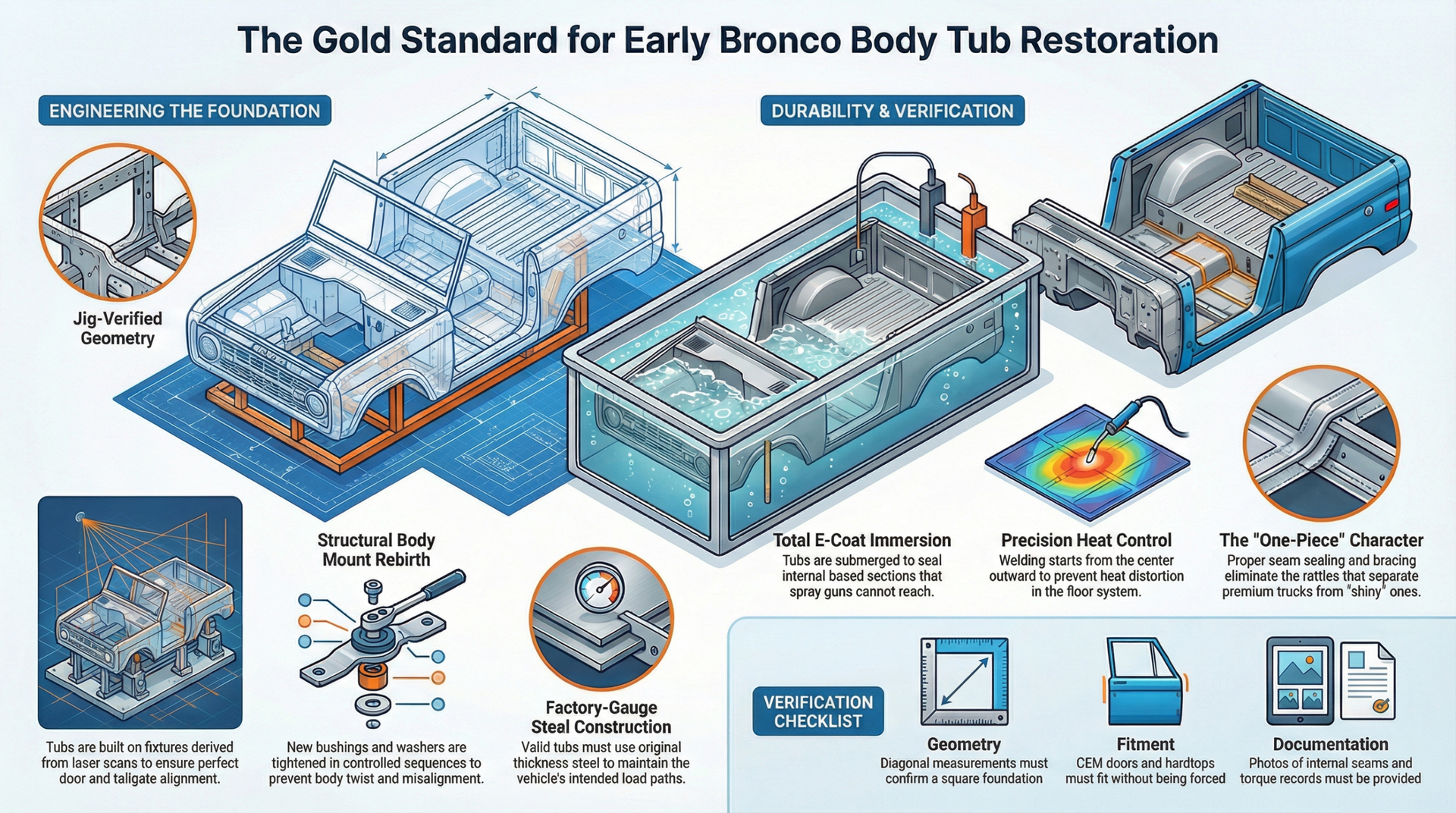
A valid tub begins with factory-gauge steel and ends with corrosion protection that reaches every internal channel. Builders who operate at a premium level press panels on fixtures derived from laser scans of original Broncos. That process ensures door posts, windshield sills, and tailgate openings align before the tub ever reaches the shop floor.
This jig accuracy eliminates the need for heroic shimming. It allows the tub to accept OEM doors, hardtops, and fenders without stretching or forcing panels into place. Geometry stays correct because the reference points were correct from the start.
Jig accuracy and baseline geometry
Precision jigs define whether a tub behaves like a foundation or a compromise. When builders weld against known reference points, door gaps remain predictable and the windshield frame lands naturally. The tub settles onto the frame instead of being dragged into position by bolts and washers.
This is where early bronco body tub standards stop being theoretical. The difference shows up immediately in how cleanly the tub meets the frame and how little negotiation the install requires.
Corrosion protection inside the structure
Before any tub ships, manufacturers immerse it in electrocoat. That process seals the inside of boxed sections and seams that grinders and spray guns cannot reach. Once the tub enters the shop, crews scuff mating surfaces, apply weld-through primer, and control heat input during welding.
That corrosion barrier is not cosmetic. It is foundational. Most early failures begin inside seams and channels you cannot easily inspect after assembly. Proper protection prevents those failures before they start.
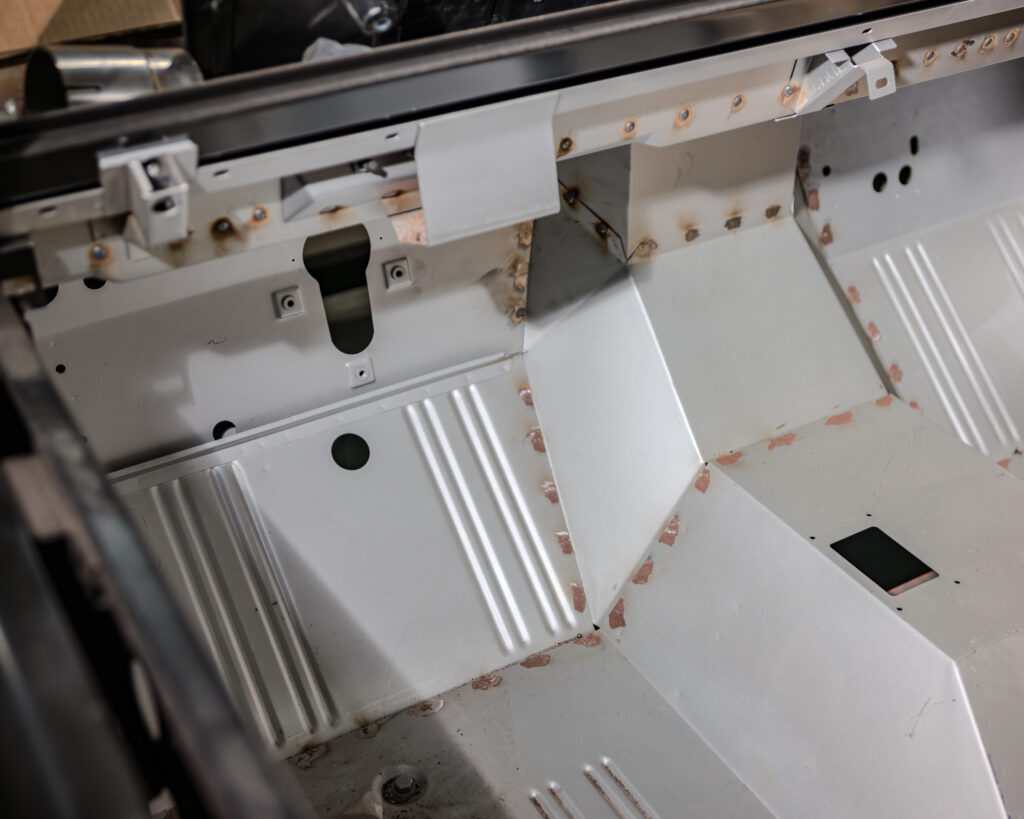
Welding the floor: seam priority, bracing, and sealer timing
Every floor replacement requires a documented plan. Builders weld from the center outward and alternate sides of the tunnel to control heat distortion. Floor-to-rail seams use stitch-butt welds, while tunnel seams rely on flanged backer welds for rigidity.
After the welds cool, the crew grinds each bead, removes residue, and seals the seam with a polyurethane or epoxy sealer. That step blocks moisture and road grime from entering the structure and protects the weld for decades.
Structural bracing and load paths
Bracing completes the floor system. Builders reweld or replace crossmembers, torque boxes, and gussets using steel that matches original thickness. When donor tubs include additional braces, the team documents their placement and reinstalls them exactly.
The goal is predictability. A square foundation lets the suspension load the frame as intended and prevents noise from telegraphing into the cabin later. Painting the floor is easy. Confirming the structure stayed square requires measurement.
Body mount rebirth: bushings, washers, and tolerance resets
Body mounts connect the tub to the frame, so builders must rebuild them before reinstalling the body. Crews repair or replace the mount plates, install new bushings, and capture them with proper washer stacks. They tighten studs in a controlled sequence that draws the tub down evenly.
Mounts define geometry. Treating them like simple hardware introduces twist that later shows up as door misalignment or windshield movement. Builders who respect early bronco body tub standards treat mounts as structural reference points.
If a mount is beyond repair, the shop levels the tub first and then welds in a new bracket. Crews use jacks, load bars, and laser levels to virtualize the tub’s position before final torque. That process prevents preload and preserves alignment.
Inspection checklist for the tub foundation
Use this checklist to verify whether a build meets early bronco body tub standards:
- Measure diagonal dimensions to confirm the jig preserved OEM geometry
- Confirm factory doors fit without forcing; check the roofline for twist
- Verify E-coat coverage inside boxed sections
- Inspect floor welds for consistent bead height and no porosity
- Confirm weld-through primer or epoxy primer was applied before assembly
- Check that mounts use new bushings, washers, and even torque
- Inspect rocker seams for wave or distortion
- Confirm seam sealer is present inside all welded joints
- Review photos, weld logs, and torque records
If a shop cannot walk through a checklist like this, they are improvising.
Questions to ask a shop before committing
Ask how the shop preserves geometry during welding. Ask what corrosion protection they use inside seams. Ask how they verify mount alignment before final torque. Ask what documentation they provide after the install.
Clear, process-driven answers indicate durable work. Vague reassurance usually does not.
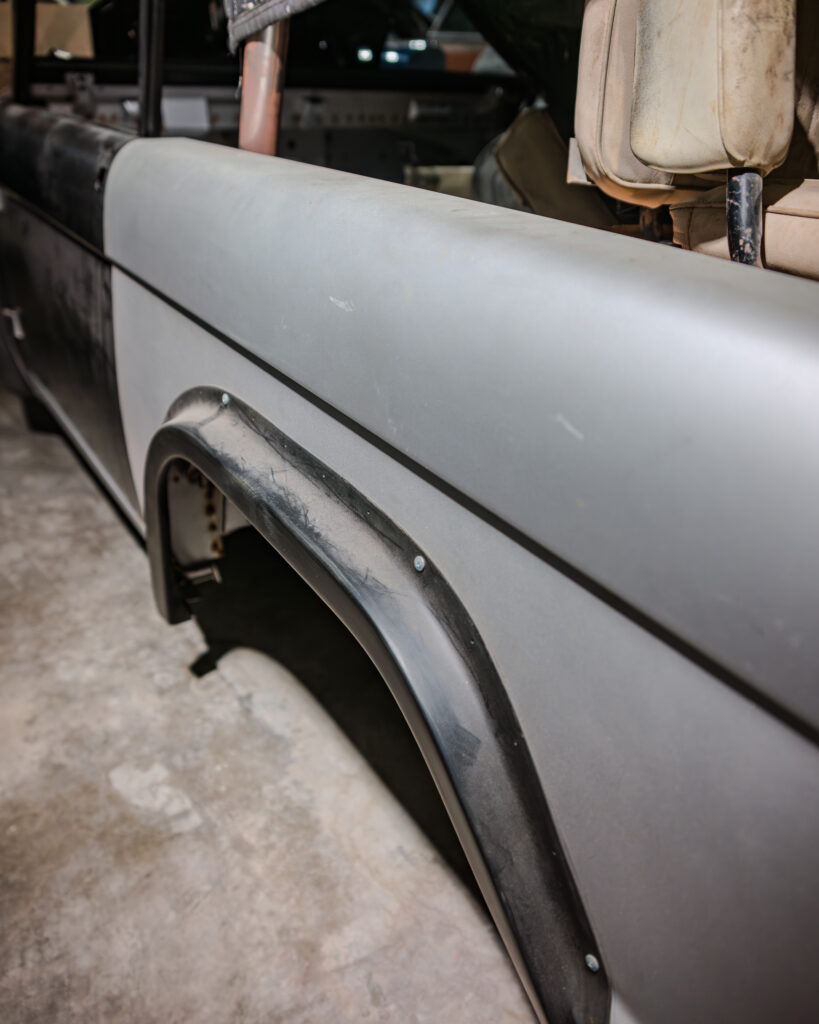
Validating the installation
Installing the tub marks the midpoint, not the finish. ASC’s quality team drives each build through a shake-down route that checks NVH, brake feel, and steering response. Floor stiffness directly affects suspension behavior, so accurate mounts and sealed seams eliminate clunks and rattles.
Cooling validation follows. Once the tub aligns correctly, radiator mounts and airflow paths line up as designed. That alignment prevents hose stress and uneven cooling during extended driving.
Documentation completes the process. Photos of floors, mounts, and adhesives—along with torque records—prove the foundation was built intentionally. Transparency protects both the owner and the next technician.
If you are choosing a shop, frame the question simply: what is the premium standard for early Bronco body tub replacement, and can they show the evidence?
asc4x4.com | (310) 396-6341
Sources:
- Complete Early Bronco Steel Body Tub Kits
- Rust Belt Offroad: Reproduction Truck Bodies
- ClassicBroncos.com forum – Fix or Replace Body?