
An early bronco fuel smell is not “old truck character.” It’s a signal that the fuel system is venting incorrectly, unsafely, or both. In a properly sorted 1966–1977 Bronco, you should not walk into your garage and immediately smell fuel fumes. You should not see fuel coming out of a vent tube on turns. And you should not have to explain gasoline odor as a quirk of ownership.
Most complaints about early bronco fuel smell come down to venting standards—not carburetors, not nostalgia, and not unavoidable design flaws. When venting is done correctly, the tank breathes vapor (not liquid), pressure stays controlled, rollover safety is maintained, and garage fumes disappear.
This guide explains why classic Bronco fuel fumes happen, how to diagnose them, and what “done right” actually looks like on a premium build.
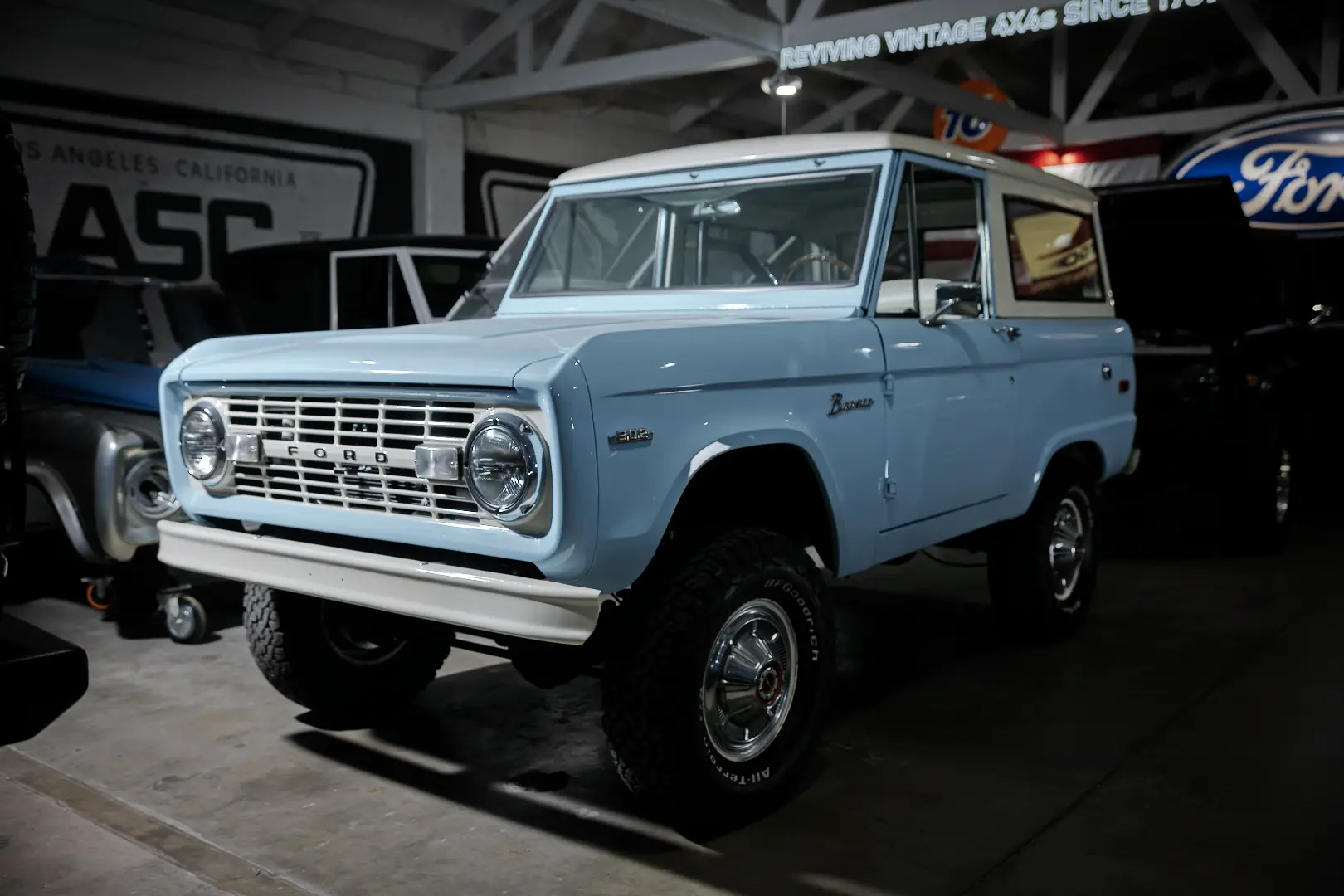
Why an Early Bronco Smells Like Fuel (and When It’s Dangerous)
Owners usually describe the problem the same way: “It runs great, but my early Bronco smells like gas after driving.” That sentence alone points to venting.
Fuel odor shows up because vapors—or worse, liquid fuel—are escaping the tank and vent system instead of being managed safely. In extreme cases, this isn’t just annoying; it’s a safety issue involving rollover protection and uncontrolled liquid carryover.
An early bronco fuel smell typically gets worse:
- after driving on hot days,
- during off-camber turns,
- or when the truck is parked in an enclosed garage.
Those patterns matter.
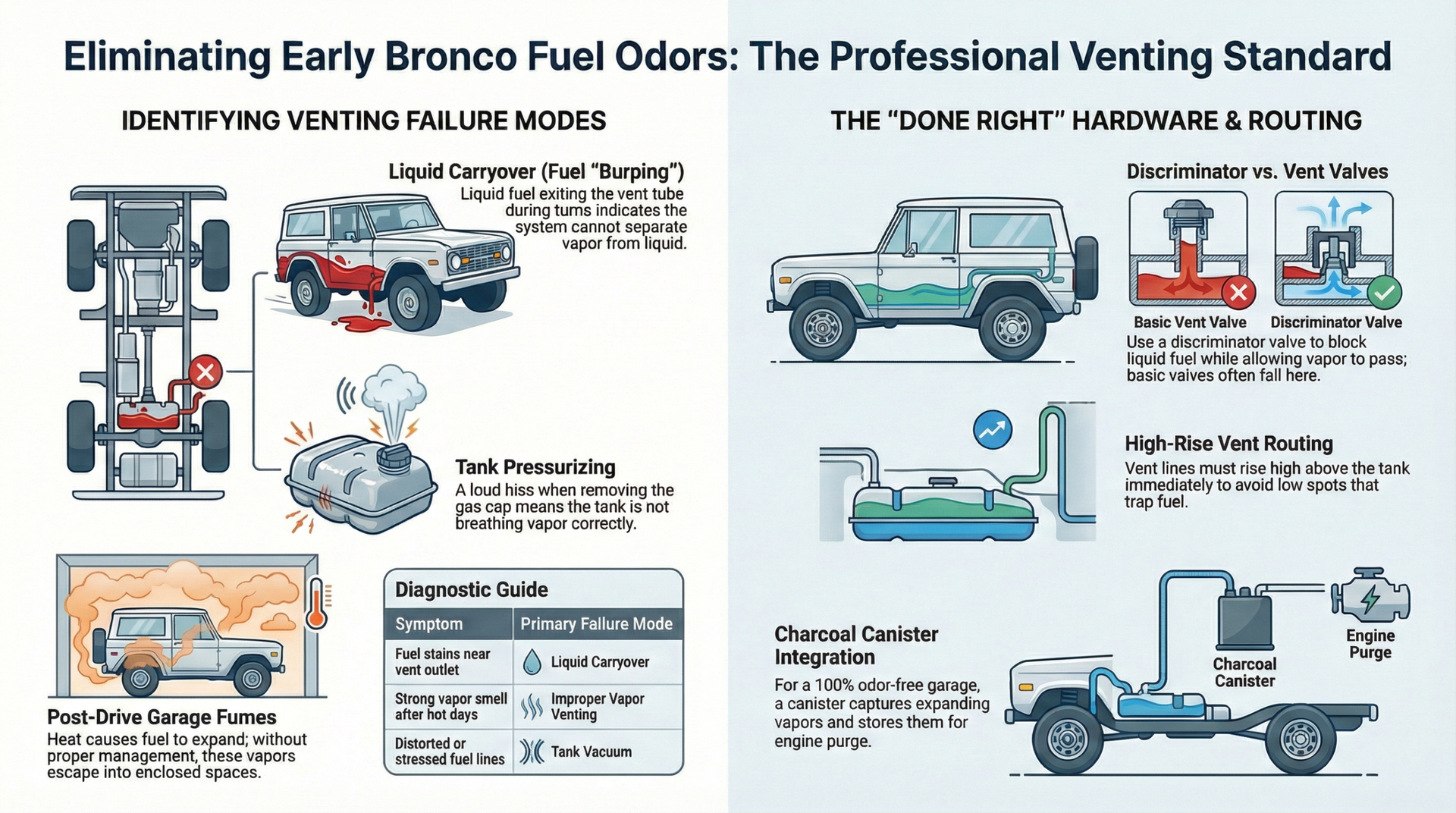
The Three Failure Modes Behind Early Bronco Fuel Smell
Every fuel odor complaint fits into one (or more) of these failure modes.
1) Tank Pressurizing
Tank pressurizing happens when the system cannot vent vapor correctly. This is common when a modern tank is paired with a non-vented or mismatched cap.
Symptoms include:
- strong vapor smells after driving,
- a loud hiss when removing the cap,
- and fuel pushing up the vent tube.
This is the classic case of early bronco fuel tank pressurizing with non vented cap.
2) Tank Vacuum
The opposite problem: fuel is consumed, but air can’t replace it. This can stress seals and lines and cause erratic behavior.
3) Liquid Carryover (Fuel “Burping”)
This is where bronco fuel vent burping happens. Liquid fuel reaches the vent line and exits during turns or off-camber driving. Owners describe early bronco fuel coming out vent tube on turns or stains near the vent outlet.
The goal is simple: vent vapor, never liquid.
Fuel Venting Components That Matter
Early Bronco Rollover Vent Valve (Baseline Safety)
An early bronco rollover vent valve is the minimum safety standard. It allows breathing under normal conditions but closes during a rollover to prevent fuel spill.
Vent Valves vs Discriminator Valves
A basic vent valve controls airflow but does not reliably stop liquid fuel. That’s why many owners report early bronco vent valve still leaking liquid fuel.
An early bronco discriminator valve is designed to allow vapor out while blocking liquid fuel. When installed and oriented correctly, an early bronco discriminator valve prevents fuel burp under real driving angles.
This distinction—early bronco rollover valve vs vent valve—is where most builds succeed or fail.
Early Bronco Fuel Tank Vent Line Routing Standards
Bad routing causes more problems than bad parts. Early bronco fuel vent routing must follow physical rules, not convenience.
Proper early bronco fuel tank vent line routing includes:
- rising high above the tank immediately,
- avoiding low spots that trap fuel,
- protecting every pass-through with grommets,
- and keeping distance from exhaust heat.
If you’re asking how to route early bronco fuel tank vent line safely, the answer is: up high, smooth, protected, and intentional.
Some owners try an early bronco rear tank vent line filter trick to catch spit-back. That’s a band-aid, not a standard. Fix liquid carryover at the source.
Filler Neck Standards: Angle, Seal, and Siphoning
Fuel smell doesn’t only come from vents. A bad filler neck install creates vapor smells and spills.
Key standards:
- Maintain a continuous filler neck downhill slope.
- Avoid kinks or low spots that trap fuel.
- Ensure the cap seals properly for the venting strategy.
When the early bronco filler neck angle is wrong or the neck sits too low, owners report early bronco filler neck too low spills fuel acceleration and persistent odor.
This ties directly into early bronco gas cap sealing standards.
Vented vs Non-Vented Gas Caps
An early bronco vented gas cap is not automatically “correct.” Cap choice must match the venting system.
Incorrect combinations lead to:
- tank pressurizing,
- vapor smells,
- or liquid fuel being forced into vent lines.
A sealing cap paired with proper vent hardware almost always produces better results than mixing strategies.
Early Bronco Charcoal Canister: When It Makes Sense
A properly vented system can still smell in a closed garage. That’s where an early bronco charcoal canister becomes valuable.
For owners asking about early bronco diy charcoal canister for fuel smell, the standard considerations are:
- placement away from heat,
- secure mounting,
- and (optionally) a controlled purge vacuum so the charcoal doesn’t saturate.
When done correctly, an early bronco garage fumes charcoal canister purge line setup can eliminate vapor smells entirely.
Dual Tank Vent Plumbing Considerations
Dual tank setups introduce complexity. Poor early bronco dual tank vent plumbing allows pressure or fumes from one tank to migrate to the other.
Standards include:
- independent vent control per tank,
- intentional combining only with proper valving,
- and avoiding frame-rail termination without airflow consideration.
Some owners debate early bronco tank vent line into frame rail pros cons. The risk is trapping fumes inside enclosed sections.
Inspection Checklist: How to Spot Venting Problems
Use this checklist when evaluating a Bronco:
- Smell fuel near the rear after driving?
- Hear aggressive pressure release at the cap?
- See wetness at the vent tube?
- Does the vent line rise high immediately?
- Is there rollover protection?
- Is liquid carryover addressed?
- Does the filler neck slope downhill?
- Is the cap appropriate for the system?
If the answer flags multiple items, you’ve found the cause of the early bronco fuel smell.
Questions to Ask a Shop
- How do you prevent liquid carryover under off-camber driving?
- What rollover safety strategy do you use?
- Where do vent lines terminate to avoid garage fumes?
- How do you validate the system after hot soak?
- If using a charcoal canister, how do you prevent saturation?
FAQs (Direct Answers for Buyers)
Is an early bronco fuel smell normal?
No. A persistent early bronco fuel smell indicates improper venting, liquid carryover, or sealing issues. Properly built systems do not stink up garages or cabins.
Why does my early Bronco smell like gas after driving?
Heat causes vapor expansion. If the system can’t vent vapor correctly—or vents liquid—you’ll smell fuel after driving.
Why is fuel coming out of the vent tube on turns?
That’s liquid carryover. The vent system is allowing fuel, not vapor, to reach the vent tube during off-camber movement.
Do I need a vented gas cap?
Only if the system is designed for it. Many builds work better with a sealing cap and proper vent hardware.
Does a discriminator valve actually help?
Yes. An early bronco discriminator valve prevents fuel burp by separating vapor from liquid, which standard vent valves often cannot do.
Can a charcoal canister eliminate garage fumes?
Yes—when installed correctly and not allowed to saturate. It’s one of the cleanest solutions for indoor parking.
What “Done Right” Feels Like
When venting standards are correct:
- no vapor smells,
- no fuel burping,
- no pressure drama at the cap,
- no explaining odors to passengers.
That’s the difference between a driver and a premium build.
If you’re diagnosing an early bronco fuel smell, or planning a build where details matter, a proper evaluation saves time, money, and frustration.
For a tailored inspection or build discussion:
asc4x4.com | (310) 396-6341
Sources:
- https://classicbroncos.com/forums/threads/fuel-vent-check-discriminator-valves.311571/
- https://classicbroncos.com/forums/threads/diy-charcoal-canister.322134/
- https://classicbroncos.com/forums/threads/gas-tank-filler-neck-location-above-bumper.321958/
- https://www.classicbroncos.com/24galtank.shtml